Generic : How many questions are there in CAT exam?
Generic : How many TITA questions are there in CAT exam?
Generic : Is NMAT registration still open?
Rajee Dhruva

“Do not put too much pressure on yourself.”
CAT 2025 Topper Rajee Dhruva Reveals How a BBA Fresher Scored 99.06 Percentile, and Why She Chose SPJIMR
Rajee Dhruva, CAT 2025 Topper and SPJIMR Mumbai student, made CAT exam the priority in the last two semesters of a BBA, joined a coaching institute, and felt the hype and pressure around CAT all year. For her, DILR and QA were very challenging sections at first. But, instead of chasing every topic, Rajee Dhruva made a deliberate call to leave areas such as 3D geometry and trigonometry, built on strengths, and kept VARC strong with proper notes and careful analysis of why each correct option was correct. Mocks began halfway through the syllabus and increased in the final two months. On exam day, a realistic target based on previous-year patterns kept the pressure in check. The result was 99.06 percentile, with 99.12 in VARC and 97.98 in DILR.
Seven IIMs called Rajee Dhruva for interviews: Lucknow, Indore, Mumbai, Nagpur, Shillong, Jammu and Udaipur, along with SPJIMR and IIT Bombay. She chose SPJIMR because of its Marketing curriculum, the chance to choose a specialisation early, strong marketing recruiters, a smaller batch and its Mumbai location. The first semester felt like “being thrown into the deep end”, but a supportive peer group and helpful seniors have made the experience, in Rajee Dhruva’s words, “very wholesome”.
In this candid interview with MBAUniverse.com, Rajee Dhruva shares how to balance CAT preparation with college, why it pays to know where to invest your effort, the mock routine that built exam-readiness, and a calm message for CAT exam preparation: “do not put too much pressure on yourself.”
Read edited excerpts from the interview with Rajee Dhruva below. Also read 100+ CAT Toppers Interviews only on MBAUniverse.com.
Read more CAT topper interviews, CAT exam guide and take free CAT mock tests on MBAUniverse.com.
A: I joined IMS for coaching, which gave me a structured starting point. Initially, I focused on attending classes, understanding concepts and clearing doubts. I then moved to solving class exercises and practice questions, while making my own notes and cheat sheets for revision. In the later stages, my focus shifted to regular mocks, mock analysis and previous years’ questions. This gradual transition from conceptual clarity to practice and test-taking helped me become exam-ready.
A: Balancing both was a little difficult initially. During the last two semesters, I consciously gave CAT a higher priority and shifted most of my focus towards preparation. Since CAT was conducted before my final semester exams, I was able to shift my focus back to college and put in extra effort for my semester exams so that my CGPA did not suffer.
A: I started by completing all the class exercises and practice questions. For vocabulary, I used Word Power Made Easy and maintained notes of root words and new words I came across. In the later stages, I focused on sectional mocks and PYQs. Most importantly, I analysed why an option was correct, which helped me handle the ambiguity that VARC questions can sometimes have.
A: I focused on solving all the class exercises and ensuring that I had practised different types of sets. I also used a timer and regularly attempted sectional tests to improve my time management, along with mocks and PYQs. Sudoku became a regular habit as well. Once I identified the types of sets I was more comfortable with, I practised them more to improve my accuracy further.
A: I completed the class exercises, made formula sheets and regularly practised through mocks and PYQs. I also made a conscious decision to leave topics such as 3D geometry and trigonometry, where I knew I would take longer to solve questions. Instead of spending disproportionate time on them, I focused on strengthening the topics where I could score more efficiently.
A: DILR and QA were initially challenging for me. After covering the syllabus once, I started focusing more on the areas I knew I could solve well. Identifying and building on my strengths was important for improving my overall score. I also made sure that VARC remained a strong section for me and helped support my overall percentile.
A: Mocks were extremely crucial to my preparation. I started taking them once I was about halfway through the syllabus, as they gave me a clear understanding of the exam pattern, question selection and time management. Initially, I took around one mock a week, and during the last two months, I increased this to 2–3 mocks a week. Analysing each mock was equally important, as it helped me identify and work on my mistakes.
A: I joined offline coaching at IMS. I knew that with an online self-paced course, I might not be as regular or disciplined. I learn better with a teacher physically present, and having someone I could approach whenever I had a doubt was also important for me.
A: I primarily used the books and study material provided by IMS, along with some additional vocabulary books. Whenever I needed a deeper understanding of a particular topic, I also referred to relevant online resources.
A: There was a lot of hype and pressure around CAT throughout the year, so it was easy to feel overwhelmed on the day. What helped me was having a realistic target based on previous-year patterns. I had calculated roughly how many questions I needed to attempt accurately to reach my target score. I knew the paper could be different, but this helped me remind myself that I did not need to attempt the entire paper. I attempted VARC first, as it was my strongest section and I wanted to tackle it with a fresh mind, followed by DILR and then QA. I also reminded myself that one exam was not the end of the world and that there would always be other opportunities.
A: The biggest learnings for me were time management, becoming more self-confident and disciplined, and learning to prioritise what was most important at a given point in time. CAT preparation taught me that consistent effort matters, but so does knowing where to invest that effort.
A: I regularly spoke to people who were going through the same preparation journey, while consciously avoiding constant comparisons. Speaking to my mentors, parents and friends whenever I felt stressed helped a lot. I also made sure to take breaks and not put additional pressure or stakes on an exam that was already stressful enough.
A: I would have liked to complete the syllabus a little earlier. Since I had joined a later batch, completing the syllabus took more time, which left relatively less time to build on the concepts through extensive practice. Completing it earlier would have given me more time to strengthen my foundation and practise.
A: I took mock interviews, prepared and practised my answers, and read newspapers regularly to stay updated. Since I was pursuing a BBA, I also brushed up on my core subjects and made sure I was comfortable answering questions related to my academic background. At the same time, I focused on being confident and authentic while answering behavioural questions.
A: I do not have full-time work experience.
A: I chose Marketing, which was also my specialization during my BBA. It has always been an area I have been interested in, and my internships in related fields also gave me some practical exposure. For freshers, I would suggest using your undergraduate years to explore different subjects and understand what genuinely interests you. You do not have to have your specialization figured out very early, and that is completely okay. Taking the time to explore what you enjoy and what you are good at can make the decision much clearer.
A: SPJIMR’s Marketing curriculum was a major attraction for me, and being in Mumbai was an added advantage. My top three criteria were: (1) the opportunity to choose a specialization early on; (2) strong marketing opportunities through the companies that recruit from the institute, along with the smaller batch size; and (3) the holistic learning experience that SPJIMR offers.
A: It has been very wholesome so far. The first semester definitely felt like being thrown into the deep end and was as stressful as it could get, but having a supportive peer group made a huge difference. The seniors were also extremely helpful during the SIP season. Now that the second semester has started, there is a little more room to explore other aspects of campus life, including committees, fests and other activities.
A: I would give a huge amount of credit to my family, who were there for me from the beginning of my preparation until my final interview. They never pressured me and instead encouraged me to take things one day at a time. My friends were equally supportive and understood that CAT was a priority for me. They even took on some additional college work and group projects when needed so that I could focus on preparation, and they were always there for me on difficult days.
A: Balancing CAT preparation with college was one of the biggest challenges. I also had to miss out on some family and friends’ events, which was difficult at times. I constantly reminded myself of the larger goal and tried to take the preparation one topic, one section and one day at a time. CAT preparation can be overwhelming, and I had my share of difficult days too. I think it is important to accept that rather than feel guilty about it, and remind yourself that one exam does not determine your entire future.
A: I think greater clarity and accessibility of information would make the process easier for applicants. Better exam-centre management, along with quick and efficient query resolution and customer support, would also make the overall experience less stressful.
A: I know how overwhelming CAT preparation can feel, but I think everything ultimately comes down to staying calm and rational on the final day. Be present, focus on the questions in front of you and give it your best. Most importantly, do not put more pressure on yourself than the exam already demands. You have prepared for this, and you’ve got this.
Bhavya Hoda

“Balancing a demanding job with CAT preparation taught me that consistency beats everything.”
CAT 2025 Topper Bhavya Hoda Reveals How a Microsoft Engineer Scored 99.33 Percentile, and Why SPJIMR Was the Choice
Bhavya Hoda, CAT 2025 Topper and SPJIMR Mumbai student, decided on her CAT exam preparation only around February 2025, while working as a software engineer at Microsoft on projects that were “very demanding”. The plan was built around the workday: daily target questions before office, a question or two in a 15–20 minute break after lunch, theory after reaching home, and weekends to make up for days when office ran late. Bhavya Hoda chose a reputed online course for its recorded lectures and live leaderboards, relied on YouTube videos for faster ways to solve Quant questions, and handled DILR, the weakest link, by prioritising DI questions that offered better returns. The result after eight to nine months of preparation was 99.33 percentile, with 99.79 in QA.
With calls from IIM Bangalore, IIM Indore, IIM Lucknow and SPJIMR among others, Bhavya Hoda chose SPJIMR for its culture and administration, courses such as Abhyudaya, and consistent placement record. Now specialising in Information Management and Analytics with an eye on product and consulting roles, Bhavya Hoda sums up the first four months at SPJIMR simply as: “It has been nothing short of awesome.”
In this candid interview with MBAUniverse.com, Bhavya Hoda shares a daily routine for balancing a demanding job with CAT preparation, why solving sets beats theory in DILR, an exam-day routine that included checking into a hotel near the test centre, and why “consistency beats everything”.
Read edited excerpts from the interview with Bhavya Hoda below. Also read 100+ CAT Toppers Interviews only on MBAUniverse.com.
Read more CAT topper interviews, CAT exam guide and take free CAT mock tests on MBAUniverse.com.
A: I thought about appearing for CAT around Feb in 2025, and I came across Cracku's online course(self-paced and live lectures both), hence I took that and prepped for CAT. The course was very nice in terms of content and I used to alternate between the 3 sections every day to remove monotony. I capitalised more on Quants because I felt it is my strong suit and took the other 2 sections also in a similar fashion to balance it out. I started with theory, did daily targets given by Cracku portal and gave their mocks a bit later (after 3-4 months, from around June)
A: So, I was working in Microsoft as a software engineer throughout my prep, and the projects I was working on were very demanding, so it was genuinely very tough to balance both.
Before starting office work in the morning I used to do the daily target questions for the day to set the pace, then after lunch I used to take 15-20 mins to maybe do a question or 2, then post office when I reached home, I used to study theory via videos or articles for a while and then practice questions whenever I felt bored. Doing this everyday was a challenge for sure, but the goal is to take small steps every day and trust your consistency. There were days where the office used to take more time and on those days, I sometimes couldn’t make it work, but I compensated on the weekends for the same.
A: For VARC, I felt the reading habit is what helps the most. I used to read the articles shared by the Cracku team, and initially there was a lot of cognitive resistance because of the fact that I did not have this habit of reading but eventually it got better.
A: Again solving sets was the best way, much better than theory in my opinion; I developed intuition by solving multiple sets in DILR, although I feel this was my weakest link and I could have done more practice here.
A: For Quants, I felt questions can be solved by someone with ample time, ofc after we are done with theory, but the meat lies in knowing the tricks to do the same thing faster. I felt Maruti Sir’s videos from Cracku really helped with this, because he used to tell how to approach which kind of problem and that was really very insightful. Also I had this formula book from Cracku, which I referred to almost on a weekly basis to revise the formulas and keep it in the conscious mind.
A: I found DILR to be very tough because it is a gamble, you either get the whole set right or you don’t. In order to get over this uncertainty, I prioritised DI questions more, because you can selectively attempt and get marks which have a better ROI comparatively. Hence, I overcame this by practicing more ofc, but also by prioritizing DI questions, increasing my overall chances of a total good score, because we should play to our strengths and make the best of the paper in front of us and not look at it section wise.
A: I feel I could have done more mock tests, because doing that makes you a seasoned person to be prepared for all kinds of papers. I used to give mock tests on a biweekly frequency on average for the last 3 months of my prep, but I wish I could have given more. I gave about 30-40 mocks during my prep (including the previous year question papers)
A: Joined a self-paced online course of Cracku. I wanted something self-paced with recorded content and live leaderboards, so that I could feel that I am a part of a larger cohort doing the same prep and gauge my prep regularly, and the benefit of a course is that it helps provide a direction and a structure to your prep.
A: Just the Cracku content, and it was very relevant to the type of questions that came in the exam.
A: I had it in slot 2, and on the exam day, since my exam centre was far, I took a hotel very nearby to the exam centre a day before, and on the exam day, I did not open any feedback about the first slot or any reviews or predictions about the same. I wanted to go to the exam with a neutral mindset and that is what I did. I had a relaxed morning, had a good breakfast and just chilled for a while before the exam. Went in the most comfortable outfit I had to reduce any externalities and issues.
A: Consistency beats everything. Even though it may sound like a cliché, if you are consistent, it will definitely lead you towards your goal.
A: Friends, Family definitely did help a lot in this entire phase. I used to hit the gym or go on long drives as a stress buster sometimes. For the motivation, I feel it was more of a strong inner desire for the long term goal which led me throughout my prep.
A: I would have done more mocks and PYQ’s, and I would have done it even when I started the prep, because it is more of a mindset development than a paper attempt.
A: Reading news, following Indian and tech specific podcasts on YouTube (tech because I had a background in tech and hence could be questioned on that), then I took Btribe course for interview prep with alums specific to colleges, and did some research on the college too before entering the interview.
A: It will help in relating better to subjects like organisation behaviour, or domain specific because theory is even better understood when you have already seen practical applications.
A: I chose Information Management and Analytics, because I had a tech background and wanted product/consulting roles. I feel this is the time where you can try to get a different spec also as per your interest, but you should have expertise, work ex or a proper SOP on why you want a specific domain.
A: The culture of the college and the administration. The NCL courses like Abhyudaya, which teach us managerial practices and also humbles us at the same time. Great Intex opportunities and of course the triple accreditation and consistent placement performances in SPJIMR since the time it was established. SPJIMR has this warm, socially conscious and wise innovation mindset engrained in every activity they do and this is something specific to only this college in India making it the single greatest choice. Also the process of admission is such that you need to have a good profile in order to get into this college, and hence you end up with the best of the best in the country.
A: It has been nothing short of awesome. I have been challenged in multiple ways where I thought I was the best. I have seen myself evolve academically, socially, personally in the last almost 4 months into a much more resilient and kind individual. I have seen such eye watering profiles of individuals who have joined this institute. I have seen the channel and network that opens up when you join SPJIMR and it is just amazing.
A: My friends and family and my coaching institute. Friends and family were my go to for any problems that came my way throughout the 8-9 months of prep and they cheered me up whenever I felt low.
A: VARC and DILR were a bit tough to get through at the start, but eventually with practice and section specific strategies I was able to overcome them.
A: Having more centralised forms and a singular regulated database where all details of a candidate are stored and they can apply to colleges easily.
A: Be consistent, dare to dream and never forget to manifest the best possible scenario for yourself.
Dhruv Aggarwal
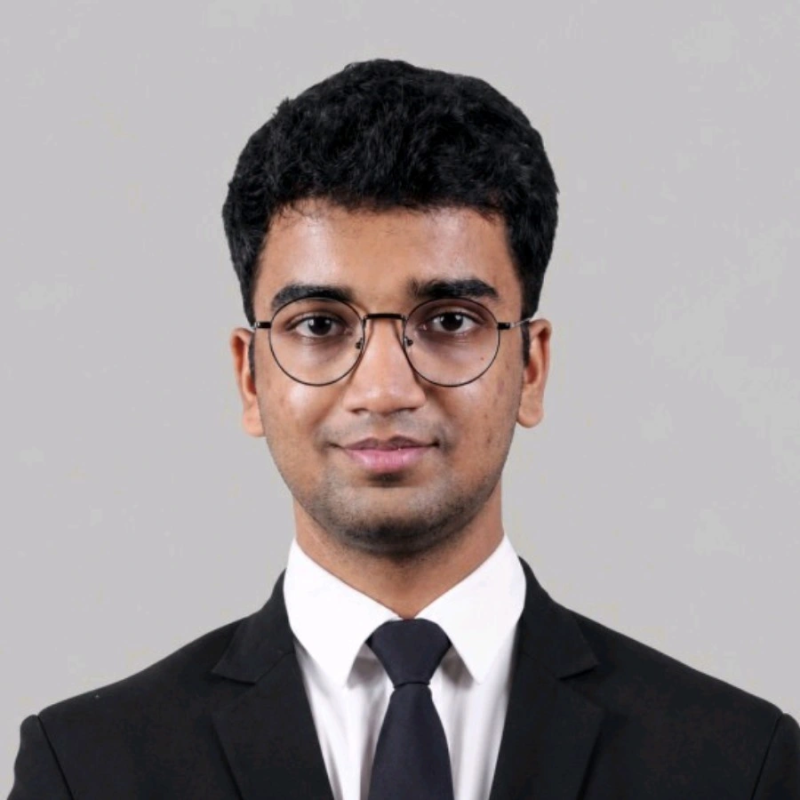
“Consistency beats studying 10 to 12 hours once in a while.”
70+ Mocks, 400+ Sectionals, Just One Rule: How CAT 2025 Topper Dhruv Aggarwal Scored 99.76 Percentile, and Why He Chose SPJIMR Mumbai – MBAUniverse.com Interview
Dhruv Aggarwal, CAT 2025 Topper and SPJIMR Mumbai student, prepared for CAT exam in the final year of college, and VARC was the section he found hardest. He was comfortable with English, yet kept getting stuck between two options that both looked right. So after every RC mistake, he went back to the passage to understand why his reading was wrong. He joined TIME for coaching, but most of his progress came from self-study: around six hours on most days, more than 70 full-length mocks and over 400 sectional tests across different coaching institutes. Bad mocks shook his confidence at first; over time, he learnt to treat them as lessons. The result was 99.76 percentile, with 99.66 in DILR, 99.15 in QA and 97.87 in VARC, his once-weakest section, along with 99+ in NMAT.
With calls from IIM Kozhikode, IIM Indore, IIM Udaipur, MDI Gurgaon and IIFT, Dhruv chose SPJIMR for three reasons: the strength of its Finance programme, a peer group from diverse backgrounds, and Mumbai, India’s centre for finance and business. His CFA journey and finance internships led him to the Finance specialisation, and his biggest surprise on campus has been how supportive the faculty and seniors are.
In this candid interview with MBAUniverse.com, Dhruv shares how he analysed every mock, why he solved around 100 good questions per QA topic instead of chasing numbers, his section-wise exam-day plan, and why consistency beats studying 10 to 12 hours once in a while.
Read edited excerpts from the interview with Dhruv Aggarwal below. Also read 100+ CAT Toppers Interviews only on MBAUniverse.com.
Read more CAT topper interviews, CAT exam guide and take free CAT mock tests on MBAUniverse.com.
A: I joined TIME for coaching, but a large part of my preparation was self-study. I tried to study for around six hours on most days and focused on being consistent rather than studying for very long hours on a few days. I started giving mocks quite early, even before completing the entire syllabus. This helped me understand where I stood and which areas I needed to work on. Over the course of my preparation, I gave more than 70 full-length mocks and over 400 sectional tests. I also used mocks from different platforms such as TIME, IMS, Career Launcher, iQuanta and Cracku. I found this useful because every platform had a slightly different level and style of questions. For me, the most important part was analysing the mocks. I would look at the questions I got wrong, the questions I could have solved but did not attempt, and the questions where I spent too much time. Over time, this helped me improve both my preparation and my exam strategy.
A: I was preparing for CAT alongside my final year of college, so managing both was definitely important. I tried to have a fixed routine and give around six hours to CAT preparation on most days. There were obviously days when college work, events or other commitments took up more time. On those days, I did not try to compensate by studying for extremely long hours the next day. I just tried to get back to my routine. I think consistency helped me much more than trying to study 10 or 12 hours occasionally. Since CAT preparation goes on for several months, I wanted a routine that I could actually maintain.
A: VARC was initially my weaker section, so I had to put in a lot of effort there.I spent a lot of time practising RCs and also made regular reading a part of my preparation. I wanted to become comfortable reading passages on topics that I might not necessarily know much about. After solving an RC, I would not just check whether my answer was right or wrong. I would also look at why I had selected a particular option and why the correct option was better. This helped me understand my mistakes better. Over time, I became better at identifying the main point of a passage and eliminating options that were not properly supported by the passage.
A: For DILR, I mainly focused on solving a lot of different types of sets. I did not try to memorise a fixed method for every type of question because the sets in CAT can be very different from one another. If I could not solve a set, I would usually spend some time trying to figure it out myself before looking at the solution. I found that the sets where I struggled the most often taught me the most. Mocks were also very important for DILR because I realised that choosing the right set is almost as important as being able to solve it. I practised quickly looking through the sets and deciding which ones were worth attempting.
A: For QA, I focused mainly on Arithmetic and Algebra because these were the areas I was most comfortable with. I first made sure that my concepts were clear and then did a lot of practice. For most topics, I tried to solve around 100 good questions rather than just solving questions for the sake of increasing the number of questions I had attempted. Whenever I made a mistake, I tried to understand what exactly went wrong. Sometimes it was a concept that I had not understood properly, sometimes it was a calculation mistake, and sometimes it was simply choosing the wrong approach. As I got closer to CAT, I focused more on mixed practice and mocks because the actual exam obviously does not tell you which chapter a question belongs to.
A: VARC was the section I found most challenging initially. I was comfortable with English, but I found it difficult to consistently choose between two options that both looked correct in an RC. I realised that I was sometimes choosing an option based on what I thought sounded right rather than what was actually supported by the passage. So I started spending more time analysing my RC mistakes. I would go back to the passage and understand why my interpretation was wrong. I also increased my reading and RC practice. It took time, but gradually I became better at looking at the passage objectively instead of going with my first instinct.
A: Mocks played a very big role in my preparation. I gave more than 70 full-length mocks and over 400 sectional tests.I started giving mocks quite early, even before completing the syllabus. Initially, I was not too concerned about the score. I mainly wanted to understand the exam and see where I stood.The important part for me was analysing every mock. I looked at questions I got wrong, questions I left despite being able to solve them, and questions where I spent too much time.I also tried mocks from different platforms such as TIME, IMS, Career Launcher, iQuanta and Cracku. This gave me exposure to different kinds of questions and different levels of difficulty.
A: I joined TIME for offline coaching. I felt that having a structured course would help me cover the syllabus properly, especially in the beginning. At the same time, I did not want to depend completely on coaching. A lot of my preparation was self-study. Once I understood the concepts, I spent a lot of time practising questions, giving sectionals and analysing mocks. So for me, coaching gave me the structure, but most of the improvement came from my own practice and analysis.
A: My main study material was from TIME, along with the mock and sectional test material from different platforms. I used TIME for the main preparation and also used tests from IMS, Career Launcher, iQuanta and Cracku. I found the different test series useful because the questions were not always the same in terms of difficulty or style. I did not try to use too many books or collect a huge amount of material. I preferred taking the material I had and practising it properly. For me, solving fewer questions carefully and understanding my mistakes was more useful than just trying to finish as much material as possible.
A: I had a clear strategy for each section because I had already tested it in my mocks. So on the exam day, I did not want to change anything at the last moment.In VARC, I usually tried to attempt all the questions. I would start with the RCs and generally finish all four passages in around 30 to 32 minutes. After that, I would move to the VA questions. For DILR, I would first quickly look at all the sets and try to identify if there was anything familiar. If I found a set I was comfortable with, I would start with that. Otherwise, I usually looked for the smaller sets or sets with more questions, because if I was able to crack the set, I could get multiple questions from it. For QA, I had mainly prepared Arithmetic and Algebra. So I would first solve the questions from these two areas and then move to the other topics. Overall, I was quite calm on the exam day because I had taken a lot of mocks and had already faced different kinds of papers. I just wanted to stick to what I had practised and not overthink things during the exam.
A: The biggest thing I learnt was that consistency is much more important than studying for very long hours once in a while. I also learnt how important it is to understand your mistakes. Just giving a mock and looking at the score does not really help. The real improvement comes from understanding why you made those mistakes and making sure you do not repeat them. Another important learning was that you need to have a strategy that works for you. There is no single strategy that everyone has to follow. I eventually developed my own approach for each section based on what I was comfortable with.
A: I tried not to make CAT preparation the only thing in my life. I continued doing things I enjoyed, such as reading, gaming and playing chess. Taking breaks helped me come back to studying with a fresh mind. I also tried not to get too affected by individual mock scores. There were definitely mocks where I performed much worse than I expected. Instead of thinking too much about the score, I tried to understand what went wrong and move on. Since CAT preparation goes on for several months, I think it is important to accept that not every day is going to be perfect. The important thing is to keep going.
A: If I could change one thing, I would probably start working on VARC more seriously from the beginning. It took me some time to understand what exactly I was doing wrong in RCs. Since reading and comprehension improve gradually, starting that process earlier would probably have helped me. Apart from that, I am happy that I started giving mocks early. They helped me understand my preparation much better and gave me enough time to work on my weaker areas.
A: For the interview preparation, I joined programs by TIME and IMS. I also gave multiple mock interviews with my friends. These were quite helpful because my friends would ask me questions that I was not expecting and would point out where my answers could be better. For current affairs, I used to read The Economic Times every day and watch Vantage with Palki Sharma regularly. That was my main way of keeping up with what was happening in the economy, business and the world. I also spent a lot of time preparing finance-related questions because I knew that Finance was a big part of my profile. I revised my academic concepts and prepared questions around finance, markets, companies and my previous experiences. Apart from this, I spent time understanding my own profile properly. I went through my internships, college experiences, achievements and the decisions I had made so that I could answer questions about them comfortably.
A: I did not have full-time work experience before joining SPJIMR. However, I did have internship experience and was involved in several activities during college. My internships gave me some experience of working in a professional environment, while my college activities and leadership roles taught me how to work with different people and take responsibility. I think these experiences have helped me during my MBA, especially when working on group projects and interacting with people from different backgrounds. At the same time, being a fresher also means that there is a lot I can learn from classmates who have already worked for a few years.
A: I chose Finance because I have been interested in the field for quite some time. My interest became stronger through my CFA journey, internships and the finance-related projects I worked on during college. What I like about Finance is that it requires you to keep learning and think through different problems. I also enjoy working with numbers and understanding how businesses work. For someone choosing a specialization, I would suggest thinking about what they genuinely enjoy rather than just looking at which specialization is popular. They should think about the kind of work they want to do after the MBA and whether they can see themselves studying and working in that field for several years.
A: There were three main things I looked at when deciding on SPJIMR. The first was the strength of the Finance program and the opportunities available to students interested in Finance. The second was the kind of people I would get to meet and learn from. I wanted a college with a strong peer group where I could interact with people from different backgrounds. The third was the location. Being in Mumbai was important to me because it is such an important centre for Finance and business in India. These were the main things I considered when making my decision.
A: I absolutely love my experience at SPJIMR so far. One thing that has surprised me in a very good way is how supportive everyone is. You hear a lot of things about B-school life before joining, especially about seniors and the pressure of the environment, but my experience at SPJIMR has been very different. The faculty and seniors have both been very supportive, and that made the transition into B-school much easier. There is obviously a lot of learning inside the classroom, but I think I have learnt a lot outside the classroom as well. Interacting with my batchmates, working on group projects, participating in activities and just talking to people from very different backgrounds has taught me a lot. The peer group has probably been one of my favourite parts of the experience. Everyone comes from a different background and has something different to bring to the table. And of course, SPJIMR has very strong placement outcomes, which was an important factor for me when I chose the college. But after joining, I have realised that there is a lot more to the experience than just placements. The people, the environment and the learning have been the biggest highlights for me so far.
A: I would definitely give a lot of credit to my family. They have always supported me in the decisions I have made and given me the freedom to pursue what I wanted. My friends also played an important role, especially during CAT preparation. Having people around who were going through the same process made the preparation much easier. We could discuss questions, talk about mocks and sometimes just take a break from studying. I think doing well in an exam like CAT is not just about one person. Having a good support system makes the entire process much easier.
A: One of the main challenges was managing CAT preparation along with my final year of college and everything else I was involved in. Another challenge was dealing with bad mocks. When you are preparing for an exam like CAT, your scores can go up and down quite a bit. Earlier, a bad score would affect my confidence, but over time I started looking at mocks more as a way to understand what I needed to improve. VARC was another challenge for me in the beginning. I worked on it consistently and spent more time understanding my mistakes instead of simply solving more questions. Overall, I think the biggest thing that helped was sticking to the preparation even when the results were not immediately visible.
A: I think the biggest improvement would be making the process more transparent. There are a lot of different stages in the MBA admission process, and students often have to depend on coaching institutes, seniors and online forums to understand what different colleges are looking for. It would be helpful if colleges clearly communicated their timelines, different stages of the selection process and what they broadly consider while evaluating candidates. Since most students apply to several colleges at the same time, having clearer timelines and communication would also make the entire process much less stressful.
A: My biggest advice would be to start early and be consistent. You do not need to study for 10 or 12 hours every day. I think it is much more important to have a routine that you can follow for several months. I would also strongly recommend starting mocks early. You do not have to wait until you finish the entire syllabus. Mocks will tell you where you actually stand and what you need to improve. Most importantly, analyse your mocks properly. Don't just look at the percentile and move on. Look at the questions you got wrong, the questions you could have attempted and the questions where you spent too much time. And finally, don't get too worried about one bad mock or one bad week. Your performance will not be perfect throughout the preparation. Keep working on your weak areas, trust the process and build a strategy that works for you.
AHAN SARKAR

“There is simply no substitute for effort and hard work”
CAT 2025 Topper Ahan Sarkar reveals how he scored 99.4 Percentile, and Why He Chose SPJIMR over IIM Lucknow
Ahan Sarkar, CAT 2025 Topper and SPJIMR Mumbai student, learnt early in his life that talent is not enough. A poor JEE Main result was his wake-up call. He practised harder for WBJEE, earned a seat in Chemical Engineering at Jadavpur University, and carried one lesson forward: “There is simply no substitute for effort and hard work,” believes Ahan Sarkar. That lesson was tested again during CAT 2025. His work as a technology consultant in data and AI often ran late into the night, so he studied in the afternoons, caught up on missed lectures the next morning, and never let his backlog run beyond 10 days. On exam day he had what he believes was one of his worst days, scoring just 92 against a mock average of around 105. His preparation still carried him to 99.4 percentile, including 99.61 in QA.
Then came the decision that defines his story. Ahan converted every interview he attended in the first list: IIM Lucknow, IIM Indore, IIM Mumbai, SPJIMR, DMS IIT Delhi and IIFT Delhi. Most people urged him to pick IIM Lucknow, but he followed his heart and elder brother’s advice and picked SPJIMR. This he calls as the best decisions he has made.
In this candid interview with MBAUniverse.com, he shares why the last two months of CAT preparation matter most, his exam-day rules, why 20 well-analysed mocks are enough and why he sees CAT as 60% effort and 40% luck.
Read edited excerpts from the interview with Ahan Sarkar below. Also read 100+ CAT Toppers Interviews and CAT Preparation Guide only on MBAUniverse.com.
Most importantly, take care of your physical and mental health. No exam is worth sacrificing either. I wish all of you the very best, and I sincerely hope you make it to your dream colleges. And if you ever need any guidance or support, please feel free to reach out. I'm always happy to help!
Stay tuned to MBAUniverse.com for more CAT Toppers interviews.
A: I joined online coaching for CAT at Elites Grid in January. My overall strategy was to finish around 70% of the syllabus first, giving tests on individual topics. After that, I planned to shift towards sectionals while completing the rest of the syllabus, For the last 2 months, most of my learning came from mocks and marathon revision sessions. I used to give one mock, and then analyse it thoroughly the next day, noting down mistakes and concepts I needed to revise. I also realised that preparation for CAT is a test of patience and endurance, the toughest part is showing up every day, after tiring days at work/college, bad sectional or mock scores or any other problems which keep occurring in life. When I was tired, I did skip a couple of classes to give myself a break and come back rejuvenated. It is VERY IMPORTANT to not burn out, since the maximum effort needs to be applied at the tail end of the journey, where even 2 months of concentrated effort has a huge disproportionate effort on your results. Enjoy the process, have fun, don’t restrict your life to just work/college and CAT prep. In the last two months, sacrifice almost everything, and give your all to the prep.
A: I was lucky since I had a remote job, and no fixed login-logout times. I worked with US/European clients who were very understanding, and I had chunks of work to be completed each week. I would work really hard on the first 2, sometimes 3, days of the week and complete everything, so that I would have the rest of the week free. My work was mostly late at night, so I woke up around 11 AM and then studied during the afternoon/evening. On days, where work prevented me from attending lectures, which happened almost every day from 10PM – 12AM, the first thing I did the next day was cover the missed the lecture and tests as soon as I woke up. It is not possible for people who’re working or in college to always stay on top of classes/tests and that’s absolutely okay, but the most important thing is to not let backlogs pile up. At no point, should you be more than 10 days behind, since the backlog feels daunting otherwise and you’ll keep procrastinating.
A: Since I was in a coaching institute, my preparation mostly involved completing all the classes, tests, assignments, PYQs, sectionals and mocks that were scheduled and to be honest, that is more than enough. It was a little easier for me since I’ve been reading and watching English content for as long as I can remember, so I had developed an intuition for what was right. However, I do feel that CAT VARC is not really a test of English comprehension and knowledge, as much as it is a test of logic. For a lot of answers, second/third order thinking isn’t required, and answers are concerned with what is directly mentioned in the passage, so extension of though isn’t really tested. You can do really well just by understanding 60-70 percent of the passage/question, and often if you do understand it well, it might lead you astray since you’ll start thinking of implications and extensions which they’re not really looking for.
A: For DILR, my strategy was to again complete all the classes, tests, assignments, PYQs, sectionals and mocks that were scheduled, which I found was all that was needed. However, out of all the sections, DILR is the most unpredictable. Your performance depends heavily on the sets you pick and how calm you are. There are going to be times when maybe 20 minutes have passed, and you haven’t managed to solve anything. Instead of going into a negative spiral, you have to pause, take a deep breath and start over. Something I also focused on was to see if I could get any useful information from the questions. There are many sets where if you solve it normally, it’ll take a lot of time, but if you can use the information in the question, you can solve it in 10-12 minutes. Listing out possible combinations/cases and quickly working thorough and eliminating incorrect ones is a vital skill, so that’s something I tried to practice as much as I can (even for sets where I solved it quickly, I would re-solve by listing out all possible solutions and then eliminating incorrect ones, since it made me more comfortable with numbers and cases, which I also supplemented with Kakuro/Sudoku
A: For QA as well, my strategy was to complete all the classes, tests, assignments, PYQs, sectionals and mocks that were scheduled. In addition, to this I maintained a notebook of questions where I struggled or where there was a lot of learning, and in the final stretch of prep, I went through all those questions once again. Marathon revision sessions were also conducted by faculty at Elites Grid, and those were super helpful.
A: The section I found challenging, till the very end, was DILR. I followed everything I mentioned in the answer to how I prepared for this section, but I was never consistent in this section. On a good day, I was able to solve 2.5-3 sets even, but my average was 1.5 sets. In a lot of sets, sometimes even the difficult ones, there are a couple of questions which can be solved with 3-4 minutes of effort, and I would go through all the questions to identify such scoring opportunities.
A: Mocks are an instrumental part of preparation, and for the last two months, most of my new learning came from questions I faced in mocks, which I was unable to solve, or which required some extra knowledge. Also, concepts are often repeated so solving mocks builds familiarity with those. Giving mocks also helps pick better sets in sections, especially DILR, while also allowing us to develop a strategy which works best for us, ensuring that we're able to atleast attempt every question, rather than wasting too much time stuck on any particular one, since a lot of the questions later on are on the easier side. It also reduces the stress which a timer normally adds since we get accustomed to it.
A: I joined coaching institute Elites Grid for preparations due to a couple of reasons. My brother recommended it to me since he knew the founders and he said they were really good at teaching and guiding students through this journey. Second, it is very confusing figuring out what to study and from where, and what kind of questions to practice. I didn't want the additional headache of having to do all of that by myself and also there was a high probability that I would miss important things, which is why I decided to join an institute.
A: I referred to the study materials provided by the institute, and they were very comprehensive. In fact, I was only able to get through 70-80 percent of it. They also labelled the material/assignments etc. based on priority so that we knew what to focus on, in case if a time crunch.
A: My goal from the very beginning was to have practiced enough that, when I was standing in front of the exam centre, I wouldn't have any regrets about not having done more. I wanted to know that I had all the information I needed, had practiced every possible question type, and that all I had to do on the day was remember what I had learned and apply it effectively.
My strategy for VARC was fairly straightforward. I would start with two RC passages, move to the VA portion, and then come back to RC. This way, I could comfortably attempt at least three passages and the entire VA section. If time permitted, I would attempt the fourth passage as well. Since accuracy in VARC is never something you can guarantee, my goal was always to get at least 20 attempts. I had reasonably good accuracy in my mocks, so I was banking on that to get me a good score.
To put things into perspective, I had also appeared for CAT in 2023, when I scored 99.96 percentile in VARC, with around 57 marks. However, despite practicing more this time, I ended up with 95.66 percentile. I don't think my English got any worse, but my accuracy certainly dropped quite a bit. That experience reinforced something I had always believed: you can never completely rely on accuracy in VARC. So, my recommendation would be to target at least 18–20 attempts to give yourself a good chance of scoring well.
For DILR, my best-case target was to solve two complete sets, which was slightly above what I usually managed in my mocks.My first priority was always set selection. I would read all four sets before deciding which one seemed the easiest. I would go through the passage, look at the questions to see if they contained any additional information I could use, and only then start solving.
There were a couple of things I consciously followed. First, I never approached a set haphazardly. I would note down all the information from the passage in a clear, organized manner so that I wouldn't have to keep referring to a large block of text. I would also tick off the points as I used them to ensure I hadn't missed anything.
Second, I was never afraid of making cases or trying different combinations. In fact, that's often the fastest way to solve a set. I had practiced enough to become comfortable with this approach, so I wasn't hesitant to use it during the exam. But I think DILR is the section where your mindset matters the most. I remember that in CAT 2023, almost 20 minutes had gone by, and I hadn't been able to solve a single set. At that point, it's very easy to enter a negative spiral and start thinking that an entire year of hard work has gone down the drain.
But you need to be able to reset mentally and make a comeback. In my case, despite not solving anything for the first 20 minutes, I managed to solve almost two sets in the next 15 minutes. That's why I believe staying calm is absolutely essential in DILR. Even if you can't solve an entire set, try to get one or two questions right and move on. Don't let one difficult set ruin the rest of your section. I would recommend targeting at least seven or eight correct questions, which should put you in a good position to cross the 95th percentile, depending on the difficulty of the paper.
Maths has always been one of my strengths, so I knew that Quant was the section where I had to maximize my score. Unlike VARC, I feel Quant is a section where you can be reasonably confident about your accuracy. My goal was to go through every question at least once without spending too much time on any particular one.
For geometry, I followed a very specific approach. I would read the question and draw the diagram. If I could immediately figure out how to proceed, I would solve it. Otherwise, I would move on. For algebra and arithmetic, I was willing to spend a little more time exploring the question because, quite often, problems that appear complicated on the surface turn out to be fairly simple once you start working on them.
However, I had a strict rule: if I couldn't figure out a clear direction within a minute, I would move to the next question. There are often easier questions scattered throughout the section, including towards the middle and the end. Spending too much time on one difficult question can cost you several easier ones.
So, my overall strategy was to maximize my attempts while prioritizing accuracy, with VARC being the one section where I was willing to take a few more chances.
My overall approach and mindset:
One thing I always kept in mind was that luck does play a role in CAT. The difficulty of your slot, the kind of sets you get, and even how you're feeling on the day can make a difference. I had Slot 3, but I consciously avoided looking at what questions had appeared in the earlier slots. I didn't want to get distracted by discussions about whether the paper was easy or difficult.
The day before the exam, I simply relaxed, listened to music, and spent time with my family. I think one of the biggest mistakes you can make is constantly reminding yourself that an entire year of hard work comes down to those two hours. You're already under enough pressure, and thinking about how important the exam is only adds to it.
The more relaxed you are, the better you're likely to perform. Of course, there's going to be pressure, but you shouldn't make it worse by constantly telling yourself that you absolutely have to ace the exam.Instead, focus on doing the best you can with whatever comes your way.
For me, that was the entire philosophy behind my preparation: work hard enough throughout the year that, when you're standing in front of the exam hall, you know you've done everything you could. After that, all you can do is trust your preparation and give it your best shot.
Having said that, I don't think I did complete justice to my preparation. I do feel I could have taken a few more mocks, which I'll talk about in the next answer. But broadly, that was my strategy for CAT.
A:Looking back, I think the most important lesson from my CAT preparation was that there is no substitute for putting in the work. You can be naturally talented or exceptionally good at Quant, DILR, or VARC, but unless you put in the hours, people who might not be as naturally adept as you will eventually leave you behind.
It's also important to remember that you're doing this for yourself and your own future. There were times when I would see my friends relaxing, going on trips, or partying while I was sitting at home preparing. It's easy to feel frustrated or burnt out in those moments, but you have to remind yourself why you started.
At the end of the day, when the results come out, most people aren't going to ask about your circumstances, whether you had long working hours, were tired, or weren't feeling well. Apart from your close friends and family, people will largely look at whether you made it or not. So, it's important to take responsibility for your preparation and put in the effort. At the same time, don't make CAT preparation your entire life. That's probably the easiest way to burn out and start resenting the process.
Especially during the initial months, don't put yourself under unnecessary pressure. Study consistently, make sure your backlog doesn't pile up, but also go out with friends, attend family events, and enjoy yourself. If your exam is in November, I would recommend cutting down on socializing only towards the end of September and throughout October and November.
Even then, give yourself a day to celebrate festivals or spend time with your family. One day isn't going to undo months of preparation. I also believe it's important to wind down during the final week. Don't try to take a mock every day. I would recommend taking at most one mock, doing some light revision, and focusing on relaxing. Constantly reminding yourself how important the exam is will only add unnecessary pressure.
Another major realization was that CAT is as much a test of mental fortitude, patience, and endurance as it is a test of knowledge. You need to show up consistently, complete your preparation, take your mocks, and keep going even when things aren't working out.
But there's also a humbling realization that, despite doing everything right, luck does play a role. To put things into perspective, I took around 20 mocks, primarily from IMS, including SimCATs. Across 18 of those mocks, my average score was around 105. In the remaining two, I scored 121 and 90. So, based on my performance, I was reasonably expecting a score of around 104–105 in CAT. However, I ended up scoring 92. In all likelihood, I had one of my worst days on the actual exam.
And that's where luck comes in. You might have your best day, your worst day, or just an average day. So, don't stress too much about what might happen on exam day, because that's not entirely within your control. What you can control is the effort you put in during the months leading up to it.
My biggest advice would be to work hard, stay consistent, but also enjoy the journey. If you make it through, that's great. And if things don't work out the way you hoped, it's certainly not the end of the world. There's always another opportunity, and you can always try again.
A:When it comes to dealing with stress, I think my natural disposition helped quite a bit. I'm generally someone who doesn't stress too much or think too far ahead. I prefer focusing on what I need to accomplish that day or week and gradually chipping away at things, rather than constantly looking at the bigger picture and getting overwhelmed by it. That approach definitely helped me stay consistent throughout my preparation.
In terms of motivation, the mentors at my coaching institute played a significant role. Having guided so many students through the same journey, they understood the challenges I was likely to face. More than just teachers, they felt like elder brothers and sisters who were always there to guide and support me.
My own brother was also a huge source of support. He's seven years older than me, has completed his MBA, and works as a strategy consultant. Since he'd already been through the journey and made it to the other side, he always had a positive outlook. Whenever I felt burnt out, he'd remind me that it was perfectly fine to take a break and that one day wasn't going to determine the outcome of my entire preparation. His optimism was a major influence on me throughout the process.
But I think the most important source of motivation has to come from within. Whenever I felt overwhelmed or questioned whether I really wanted to continue, I reminded myself why I had started in the first place.
Nobody had pushed me or forced me to pursue an MBA. I had chosen this path for myself because I wanted to grow, do better, and move forward in life. And I think that's something everyone needs to realize. You can listen to others, talk to mentors, or look at someone else's journey and feel inspired for a day or even a week. But to sustain yourself through six to nine months of preparation, that motivation needs to be internal. At the end of the day, you're doing this for yourself and your own future. Other people can support and inspire you, but you have to be your own biggest motivator.
A:If I could change one thing about my CAT preparation, it would probably be the number of mocks I took. I took around 20 mocks, but I think 30 was a very achievable target. Those 10 additional mocks could have helped me refine my strategy, improve my time management, and become a little more comfortable with the exam. I feel I did about 95–97% of what I had set out to do, but perhaps that last 3–5% could have made a difference on the final day. Whether those extra mocks would have actually changed my performance, I can't say for certain, but it's something I do think about.
A: When it comes to GDPI preparation, one of the first things I did was list down almost everything significant about my life, from my family background, education, and work experience to my hobbies, interests, and any memorable incidents. This gave me a comprehensive understanding of my own journey and proved extremely useful when preparing for personal interviews.
I had also enrolled in GDPI coaching at B-Tribe, where I participated in mock GIs, PIs, and GDs. What really helped was that many of the mentors were alumni of the institutes I was targeting and had around five to six years of professional experience. They often brought perspectives that I hadn't considered and helped me prepare for questions I wouldn't necessarily have anticipated.
To put things into perspective, during one of my SPJIMR mock GIs, I was asked to introduce the person sitting next to me. Interestingly, I was asked the exact same question in my actual GI1. Since I had already encountered it during my preparation, I was much more comfortable answering it.
So, I think my GDPI preparation largely came down to two things: knowing my own story thoroughly and getting as much exposure as possible to different interview scenarios through mocks and feedback.
A: I think having work experience definitely helped me in a couple of ways. First, it gave me substantial content for the one-page CV that every MBA student has to prepare. More importantly, understanding the business impact of my work allowed me to steer interview discussions towards areas where I was confident and could demonstrate my contributions.
Second, having worked in a corporate environment helped me navigate interviews better. I was already familiar with professional interactions, the kind of answers interviewers might expect, and how to communicate my thoughts effectively. So, work experience certainly gave me an advantage. However, I also know several freshers in my batch at SPJIMR who have done incredibly well despite having no prior work experience.
That's why I believe having a well-rounded profile is more important than simply having work experience. Your profile shouldn't be too one-dimensional or limited to academics alone. Extracurricular activities, positions of responsibility, and other meaningful experiences are equally valuable. Ultimately, I think what matters most is the breadth and depth of your experiences and what you've learned from them, rather than whether you're a fresher or someone with work experience.
A: I chose Information Management and Analytics (IM&A) because my work experience has primarily been in tech consulting, and I've always had a strong interest in technology. Even as a child, I enjoyed tinkering with different kinds of hardware and software, so I didn't want to lose touch with technology after pursuing an MBA.
I also believe that, given the way the world is evolving, technology is going to become an integral part of almost every business function, whether it's finance, marketing, operations, or anything else. So, choosing IM&A felt like a natural way to build on my existing experience while staying up to date with developments in technology.
For candidates considering SPJIMR, there are two programs: PGDM, where you're admitted with a specialization, and PGDM-BM, which is a general management program where you choose a focus area later.
For PGDM, the specialization you're offered depends quite heavily on your existing profile and work experience. For instance, someone with an operations-heavy background is more likely to be offered Operations and Supply Chain Management. You do get to indicate two preferences, and it's possible to receive your second preference as well.
There is also an option to change your specialization later, although that's subject to certain criteria. Ultimately, I would recommend choosing your specialization based on your existing experience, your interests, and, most importantly, the kind of work you see yourself doing in the future.
A: I think my decision to choose SPJIMR came down to three major factors. First, the experiential learning opportunities. When I was going through SPJIMR's website, two programs immediately stood out to me: Abhyudaya and DOCC.
Abhyudaya is a mentorship program where every PGP1 student is assigned a child from Mumbai's K Ward to mentor. DOCC, or Development of Corporate Citizenship, involves spending a month in rural India, working with local NGOs and communities to address real-world challenges. These programs were immediate differentiators for me because I believe a significant part of learning during an MBA happens outside the classroom. In the real world, you don't get clearly defined problem statements or all the information you need. Problems are often unstructured and constantly evolving, and the best way to learn how to navigate them is by working with real people on the ground.
Second, and perhaps most importantly, was the culture at SPJIMR. My brother had several friends who were SPJIMR alumni, and they were unanimous in describing the institute as collaborative, welcoming, and supportive. MBA programs in India often have a reputation for being extremely competitive, sometimes to the point of becoming toxic. It's almost treated as a rite of passage, with people arguing that you need to experience this to survive in the corporate world. But I didn't want to spend two years in an unnecessarily stressful or competitive environment. I wanted to be somewhere people genuinely supported one another.
In fact, I had also converted IIM Lucknow in the first list, and almost everyone advised me to choose it over SPJIMR because of its more recognizable brand. My brother, however, was the one person who consistently encouraged me to choose SPJIMR. I still remember him telling me, "If you want to trust me on one thing in life, trust me on this: go to SPJIMR."
At the time, it felt like a leap of faith, but having come here, I can confidently say that it's been a fantastic decision, and things have worked out really well for me. The third factor was the opportunity to pursue my preferred specialization. At many other MBA institutes, I would have been pursuing a general management degree and could potentially have ended up in a sales or marketing role, which wasn't necessarily aligned with my career aspirations.
At SPJIMR, I was getting Information Management and Analytics (IM&A), which aligned closely with my background in tech consulting and my long-term interests. It allowed me to build on my existing experience rather than move in a completely different direction. So, ultimately, it was the combination of experiential learning, a collaborative culture, and a specialization aligned with my career goals that made SPJIMR the right choice for me.
A: My experience at SPJIMR so far has been nothing short of fantastic.
As I mentioned earlier, choosing SPJIMR over IIM Lucknow was a big leap of faith, especially when almost everyone, except my brother and mother, advised me to choose IIM Lucknow. But looking back, I think it's been one of the best decisions I've made. For starters, I secured a summer internship that I might not have gotten elsewhere, which was an incredible outcome for me.
But beyond placements, what has really stood out is the culture. Everything I had heard about SPJIMR being collaborative and supportive has turned out to be true. All divisions are incredibly supportive and respectful, and the seniors are exceptionally hands-on. Whether it's the PlaceCom or any other student committee, people are always approachable and willing to help.
There's very little sense of hierarchy between batches, and even the faculty are extremely accessible. Everyone genuinely seems invested in helping you make the most of your time here. The professors are excellent, and the classes are genuinely engaging, especially in the IM&A specialization. A lot of the learning is hands-on. You get to build things, experiment, and learn by actually doing, which I believe is one of the most effective ways to learn.
Beyond academics, I've already made some amazing friends, and these past four months have been an incredible experience. In fact, my only concern now is that these two years are going to go by far too fast.
A: When it comes to thanking the people who have contributed to my success, I think there are far too many to name. As they say, it takes a village to raise a child, and I believe the same holds true for my journey. There have been so many people who have played an important role in helping me get where I am today.
First and foremost, my family, especially my mother and brother. My mother has always pushed me to do better and never allowed me to become comfortable with being average. At the same time, she's never imposed her expectations on me. She's encouraged me to figure out what I want to do next, and whatever I've decided, she's always supported me wholeheartedly.
My brother has been equally instrumental. Having already completed his MBA and gone through the entire process himself, he knew what worked and what didn't. While he had to figure out a lot of things through trial and error, he made sure my journey was considerably smoother. Whether it was recommending Elite Squad, encouraging me to choose SPJIMR over IIM Lucknow, or simply guiding me through difficult decisions, his advice has consistently worked out for me.
I'm also incredibly grateful to Elite Squad, the institute where I prepared for CAT. I genuinely don't think I could ever repay what they've done for me. They were much more than teachers who simply covered the syllabus. They were mentors who guided me throughout the journey.
Whenever I felt overwhelmed by my backlog, burnt out, or disappointed with my mock scores, there was always someone I could reach out to. Whether it was 4 a.m. or any other time, they would respond as soon as they could. I don't think they ever left a single message unanswered, and that kind of support made a tremendous difference.
I'm equally thankful to everyone who helped me prepare for my GIs and PIs. A lot of the feedback I received during those mock interviews was something I consciously incorporated into my actual interviews. I believe that played a significant role in helping me convert every interview I appeared for in the first list itself.
And, of course, my friends and the people I prepared alongside. There were countless late-night discussions about what was working, what wasn't, and how we could learn from one another. Having people who understood exactly what I was going through made the entire process much more manageable.
I think a journey like this is incredibly difficult to undertake alone. You need people who believe in you, guide you, and support you when things aren't going your way. I'm sure there are several people I've forgotten to mention, but I'm genuinely grateful to everyone who has been a part of my journey. I wouldn't have made it this far without them.
A: I think one of the biggest challenges I faced during my academic journey, apart from CAT, was overcoming complacency.
Back in school, I found it relatively easy to grasp concepts. I would attend classes, understand what was being taught, and assume that was enough, without putting in much effort to actually practice solving problems. But competitive exams are an entirely different ball game. Understanding a concept is one thing, but having practiced it enough to recall it instantly, identify the right approach, and solve a question accurately within 30 seconds or two minutes is something else entirely.
I think JEE Main was where I finally met my match. I performed terribly, and that was a major wake-up call for me. It made me realize that understanding concepts alone wasn't enough; I needed to put in the work.
I took that lesson seriously, practiced much harder for WBJEE, and eventually secured admission to Jadavpur University. So, things did work out, but more importantly, I learned something that I've carried with me ever since, whether in CAT preparation, academics, or even my professional life.
There is simply no substitute for effort. Some people might need 12 hours to achieve something, while others might need eight, but everyone has to put in the work. Natural ability might give you a head start, but without consistent effort and practice, you're unlikely to achieve the results you're aiming for.
A: I think there are a couple of areas in the MBA admissions process where aspirants face unnecessary difficulties. First, the interview locations and scheduling. For instance, IIT Bombay conducted its interviews on its Mumbai campus, while IIT Delhi conducted them in Delhi. For many candidates, these interviews were scheduled just a day or two apart, making it extremely difficult to travel between cities. This not only adds a significant financial burden, especially for candidates for whom these institutes might be their best options, but also means that they often arrive at interviews exhausted and unable to perform at their best.
Since IITs have campuses across several major cities, I think a more practical approach would be to offer interview centres in cities such as Delhi, Mumbai, Bengaluru, Chennai, and Kolkata, similar to what many IIMs already do. This issue isn't limited to IITs, though; some IIMs could also improve in this regard. Second, I think the application process could be streamlined. Rather than requiring candidates to repeatedly fill in the same personal, academic, and professional details for different IIMs, there could be a common application form for information that remains the same across institutes.
Candidates would then only need to fill out the institute-specific sections, such as behavioural questions or statements of purpose, separately.
A: My biggest advice to CAT 2026 aspirants would be to make the most of these last two months, because I genuinely believe they're the most crucial phase of your preparation.
You could have worked incredibly hard for the first six months, but if you don't give it your best during October and November, you might not get the results you're hoping for. So, make these two months count.
First, don't take mocks just to score well. You might score 100 in one mock and 60 in the next, and that's perfectly normal. Your scores will fluctuate, so don't let them dictate your confidence. Instead, use mocks to experiment with your strategy, figure out what works for you, and identify your weaknesses. Try to cover the entire paper and attempt difficult questions during practice so that you're better prepared if similar questions appear in the actual exam.
Most importantly, analyze every mock thoroughly. It's absolutely fine to take 20 mocks instead of 30, provided you've analyzed those 20 properly. Simply taking a mock isn't going to help you improve. It's understanding where you went wrong, identifying the gaps, and working on them that makes the difference. Second, don't burn yourself out. CAT isn't an exam that necessarily requires you to study for 10 hours every day. Consistency matters much more than occasional bursts of effort.
Studying for two and a half or three hours every day is far better than studying for 10 hours one day and doing nothing for the next three. I understand that balancing preparation with college or work can get hectic, and falling behind occasionally is perfectly fine. Just make sure your backlog doesn't accumulate to the point where it becomes overwhelming.
Ultimately, my advice is to work hard enough that, when you're standing in front of the exam centre, you don't feel that you had the time and opportunity to do more but didn't. As long as you know you've given it your best, whatever happens afterwards is something you can make peace with. I also genuinely believe that luck plays a significant role in CAT. In my mind, it's almost a 60–40 split between effort and luck. That might be a bold claim, but that's how I see it. You can control the effort you put in, but you can't control the kind of paper you get, your slot, or how you're feeling on the day. So, focus on the 60% that's in your hands and don't worry too much about the rest.
I know it sounds a little philosophical, but I genuinely believe that things have a way of working out. You might not get the outcome you want right now, but when you look back a few years later, you'll often find that everything fell into place in ways you couldn't have imagined. So, stay calm, stay happy, and enjoy the process. This is a journey you'll remember long after the exam is over, regardless of where you eventually end up.
Anmol Gupta
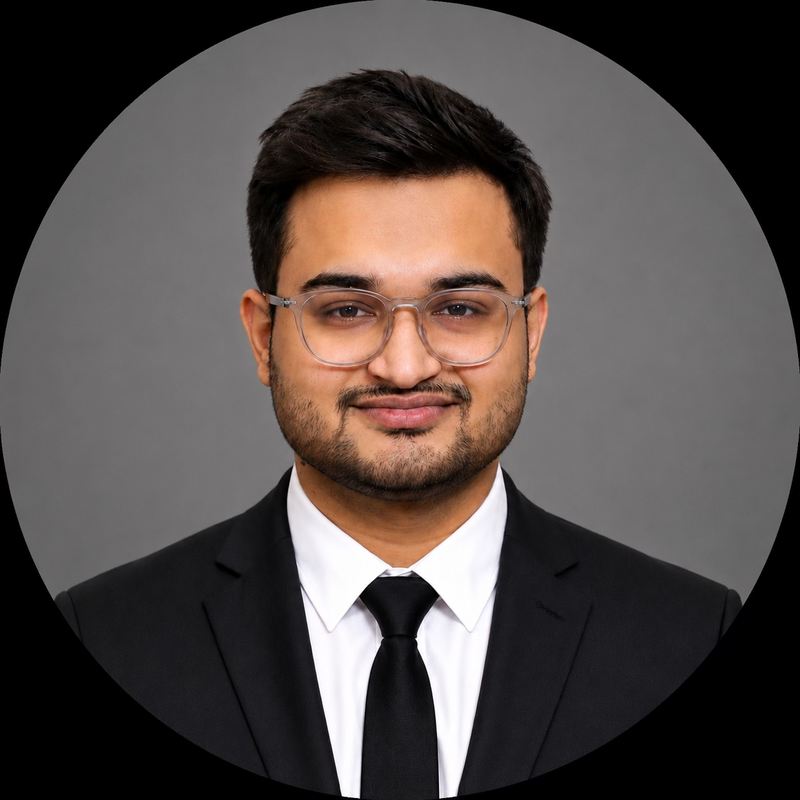
“There was no coaching: just two mock series, previous years’ papers, 60–70 full-length mocks and a tracker sheet of every mistake.”
Zero in VARC in 2024 to 99.96 Percentile in 2025! CAT 2025 Topper Anmol Gupta Reveals How He Crack CAT Without Coaching, and Why He Chose SPJIMR Mumbai – MBAUniverse.com Interview
Anmol Gupta, CAT 2025 Topper and SPJIMR Mumbai 2026-2028 batch student, knows what it takes to come back! In CAT 2023, he scored 99.47 percentile but missed his dream institute at waitlist number 1. In CAT 2024, appearing without preparation, he scored 95.58 percentile with a zero in VARC. For CAT 2025, he went all in while working a full-time, six-day office job with long daily commutes, reading articles on metro rides and reserving Sundays for mocks. There was no coaching: just two mock series, previous years’ papers, 60–70 full-length mocks and a tracker sheet of every mistake. Even negative marks in a mock in November did not stop him. The result was 99.96 percentile, with a perfect 100 percentile in DILR and 99.9 in QA.
With interview calls from IIM Ahmedabad, IIM Bangalore, IIM Calcutta, IIM Lucknow, FMS Delhi and ISB’s PGPYL among others, Anmol joined SPJIMR Mumbai, one of his top preferred colleges. He chose it after his own research, feedback from several top B-school alumni and a close look at how colleges had performed recently.
In this candid interview with MBAUniverse.com, Anmol explains his CAT exam preparation, how he worked on VARC, his weakest section since day one, by reading 3–4 Aeon essays a day and solving every CAT RC since 1990, how he set his sights on 100 percentile in DILR and achieved it, why self-study worked for him but beginners should take coaching, and why believing in yourself matters most.
Read edited excerpts from the interview with Anmol Gupta below. Also read 100+ CAT Toppers Interviews only on MBAUniverse.com.
Read more CAT topper interviews, CAT exam guide and take free CAT mock tests on MBAUniverse.com.
A: My overall preparation strategy was dependent a lot on Mocks and practice. I give an equal emphasis on all the three sections and make sure I study all the topics and not limit myself to only important ones.
A: I was having a full time office job – 6 days a week with travelling involved. At times, I have utilised my morning metro journeys to read articles and post office, after getting back I made sure that I will be sitting for preparation. I reserved Sundays for mocks and made sure every Sunday I am giving 1 mock initially. Once the exam came closer, I increased my frequency for the mocks.
A: VARC has been my weakest section since day 1. I make sure to read a lot which really helps in this section. I used to read 3-4 Aeon Essays on a daily basis as it really helps to stay focused while reading articles. Plus I solved all the RCs that came in CAT since 1990 which made me familiar with the type of questions and passages that have come over the years. And giving a lot of mocks and analysing your mistakes really helped me to improve this section.
DILR has always been my favourite section and I was quite naturally good at solving puzzles. I have loved puzzle solving since childhood and I also like solving Sudoku. So, yes, a natural inclination towards the pattern of the section was a key strength that I carried forward. Apart from this, I solved a lot of mocks, sectionals and PYQs and whenever I am unable to sit, I make sure to practice it after the exam. Being my strongest section, my eyes were set on getting a 100%ile in this section, which I eventually achieved
For QA, my preparation was again through mocks and PYQs only. I was quite familiar with almost all the topics so I just required practice. However, certain concepts and formulas were kind of alien to me so, I made a separate formula book for this section, which I revised in the last couple of days of CAT, and I used to practice more questions from PYQs for the topics like Geometry in which I was comparatively weaker at. I also have developed a few of my own methods to solve the questions quickly which were quite different from the regular approach.
A: I was quite weak with the VARC section. I overcame it by doing a lot of dense reading and solving more and more RCs. Also, I had a group of CAT mock toppers, where we used to discuss our mock scores, and help each other out with the sections the other person is weaker at. I used to ask the strategies of my peers in the VARC section and eventually this competitive learning environment really helped us to sail through this journey.
A: Mocks have helped me the most in my preparation. My entire preparation was based on solving more and more mocks. Mocks have helped me to discover my weaker areas and to devise a paper attempt strategy that really worked out for me in the actual exam. I have made a mock tracker sheet, which I used to keep a track of my scores, mistakes, weak and strong areas. I attempted around 60-70 full length mocks and 25-30 sectionals inclusive of all the 3 sections.
A: I prepared on my own. I always have had a good aptitude so, I know I could do it without much external help. Also, there were multiple top B-school alums which I personally know, and all of them advised me to just focus on mocks and coaching wasn’t a requirement for me. However, if someone is a complete beginner, I will recommend them to take coaching.
A: I refer to multiple mock series. I have had 2 mock test series and solved PYQs only. They were really effective and I highly recommend this strategy for someone who already has a decent aptitude.
A: I have developed my CAT taking strategy while taking mocks and my approach and mindset on the CAT exam day was just to follow the strategy that I have developed.
A: The most important learning was to believe in yourself as there were days I was completely lost and felt that things weren’t working out for me but I have had a belief that I will do something good and eventually things did work out.
A: On stressful days, I used to take a break. I talk to my close ones, and sometimes I just go out for parties to get together with my friends. Also, I write poetries so, there are days I just write it out and mostly relaxing and not worrying about studying at all.
A: I would probably change the amount of stress that I have taken. Sometimes, I used to take a lot of stress and having less or no stress is always better.
A: I enrolled myself into a GD/PI/WAT coaching and have attended many mock PIs and GDs. I also have also given my mock PIs to multiple top B-school alums and have always worked on the feedback that was provided to me.
A: Work experience really helps you to know where you want to move ahead in your life and having work experience also kind of prepares you for term 1 at MBA as you have to manage a lot of things together. So, if someone is able to manage their preparation along with work, it would be comparatively easier for them to manage term 1.
A: I choose marketing because I always have had an inclination towards the field. I also have had my work experience in the same field so, it kind of helped me in making the decision. The aspirants should have a thorough understanding of all the specializations and what the respective specialization has to offer. Even though they might have an inclination towards a certain field, yet research about all the fields, which I also did. Also, see the career outcomes and long term career trajectory for the chosen field. Also, look at the entry level jobs post program completion and what are their day to day responsibilities.
A: I have had a preference order in mind. SPJIMR was amongst my top 5 preferred colleges. The top three selection criteria were – My own research, Feedback from multiple top B-school alums, College performance in the last 2-3 years compared to other colleges.
A: The experience at SPJIMR has really been fun. There was a lot of classroom as well as non-classroom learning.
A: I would like to credit my parents for my success. They have also motivated me and believed in me that I will do something good. My parents make sure that I get the best study environment and resources available since my childhood. My younger brother and my friends have also believed in me and they constantly used to push me to work hard and at times they have said that you will get better results than what you are expecting.
A: There were no significant challenges as such in my academic journey. Thanks to my parents for that, I have had ample resources to pursue my academic journey. A key challenge I would say was to manage my job along with CAT preparation. In the initial few days, I used to get quite drained after office, but eventually, I developed a study habit by forcing myself to sit every day and that is what worked out for me.
A: I feel the current MBA admission process is applicant friendly only, however, one thing which could be done is to introduce online interviews, because some participants find it difficult to travel for each and every interview. Like I lived in a metro city, so, it was easy for me to travel but I have met a lot of people in my MBA interviews who had to travel to multiple cities for each interview which used to place a lot of mental and financial stress on them.
A: Just believe in yourself and stay focused on your journey. You’ve got this.
CAT Application Form Edit Window 2026: Closed on October 6, 5 PM
CAT Edit Window Dates 2026: CAT Application Form 2026 closed on September 22, and last date for payment of the application fee was September 24, 2026. CAT 2026 Edit Window opened on October 5, and closed on October 6 at 5:00 PM. IIM Indore has confirmed that no further extensions will be granted beyond this deadline. Check notification below. Only photograph, signature, test-city change allowed. Check how to correct errors in CAT application form 2026 in the article below.