Sahiti Potnuru
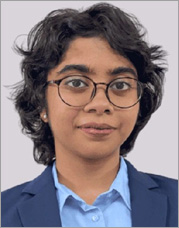
"I Overcame my Weakness in QA by tackling all the easy to moderate questions without wasting time on the hard ones"
CAT Topper Interview: How Sahiti Potnuru Cracked CAT 2023 with 98.23% to Join SPJIMR Mumbai
Sahiti Potnuru from Hyderabad, cracked CAT 2023 with 98.23 percentile and is pursuing PGDM from SPJIMR Mumbai. A B.Sc. in Hospitality and Hotel Administration from IHM Pusa, Sahiti has 15 months of work experience. Sahiti loves Singing, baking, crocheting. Apart from SPJIMR, Sahiti was offered admission by IIM Indore and all the 10 CAP participating IIMs but she preferred to join SPJIMR Mumbai.
Sahiti’s CAT preparation journey has many lessons. For instance how she got motivated to pursue MBA, how she overcame her weakness in QA section, how she got motivated to join SPJIMR despite getting admission offers from IIMs. With this let us read Sahiti’s responses to MBAUniverse.com questions.
We hope you found this CAT topper interview both insightful and inspiring. Read more CAT Topper Interviews. Also read all about CAT 2025 Exam, CAT Registration, CAT Preparation 2025, CAT Syllabus, CAT Pattern and take CAT Mock Tests.
I started preparing seriously towards the end of July 2023. With nearly four months left, I focused on covering all the QA topics over two months with occasional DILR practice sessions. I wrote one mock exam every day in the five weeks leading up to the exam. This was supplemented by constant sectional tests.
Most of my VARC preparation took place through mocks. With every exam, I tried to improve my reading, comprehension and retention speed. After exploring multiple strategies, I landed on completing the RC with ten minutes to spare for the VA. I had to constantly remind myself to ignore unsure questions to avoid negative marking.
I showcased immense improvement in DILR from being unable to solve a single set to managing three whole sets in mocks. I focused on selecting the correct sets and getting them right. I began with getting just one, then two and eventually three. I made it a point to move past sets if I spent 10 minutes with no progress. The speed and precision came with a lot of practice and exposure to different types of questions.
With four months to spare, I planned on covering the syllabus is two months. I made an elaborate schedule with all the topics alternating between ones I liked and disliked. Each topic was split into understanding the concepts, practising examples and solving without immediate access to solutions. Despite my efforts, I did not showcase the proficiency I was aiming for. As I went on with mocks, I focused on grounding myself and solving only 6-7 questions right without wasting time on impossible questions or risking negative marking.
I would say I was weak at QA. I was unable to overcome it completely, but the eventual solution was to tackle all the easy to moderate questions without wasting time on the hard ones. Negative marking should not be ignored.
Mocks played a huge role in my success. I was unable to even complete the very first mock I gave in January 2023. I was immediately humbled and disheartened. Upon covering around 60% of the syllabus, I began giving mocks again. Soon, my fear of mocks lifted, and I focused on improving my strategy and speed. Additionally, I had to constantly remind myself not to let the results affect me extensively - neither positive nor negative are entirely reflective of the actual exam. Overall, I solved at least 50 mocks and 60 sectional tests.
I alternated between the coaching centre’s classes and self-study depending on the topic I was covering and whether I required help. If not a coaching centre, it is often useful to study with friends.
I referred to the material provided by my coaching centre and Arun Sharma’s textbooks. Additionally, I went through the NCERT textbooks as required. Together, they provided all the necessary support.
My last mock was two days before the exam. The day before CAT, I did not do any preparation. I just focused on distracting myself and getting ample rest. On CAT day, I glanced through all the important QA formulae once. My exam was in the afternoon slot and I made it a point to not listen to any information about the morning slot. I did not want to be going in with any biases. I had a specific strategy for each section and tried my best to follow it.
My coaching centre provided preparation assistance for GD/PI/WAT rounds. I took multiple mocks with them and my friends. Practice helped me frame and further enhance to expected interview questions. Especially for SPJIMR, I took part in multiple group interview mocks.
I have experience in administration and hospitality. Both have immensely enhanced my communication skills. Additionally, I have experience managing people, situations and deadlines. They also help me bring an element of creativity.
SPJIMR’s focus on values, smaller batch size, diverse cohort and location drove me here. Additionally, I found SPJIMR’s admission process quite welcoming.
My experience at SPJIMR has been very enriching so far. My interest in marketing has deepened with the interactive class discussions and case competitions. I am enjoying the exposure to a wide range of topics and interactions with industry leaders. I am pleased to be making meaningful connections with my batchmates.
My friends and family played a huge role in my success. Not only did they help with exam and interview preparation, they also ensured I remained motivated throughout.
The biggest challenge was my intense fear of failing the exam and interviews. The only way I was able to fix this was by giving mocks knowing they’d have to go poorly before they got better. I realised it was okay to embarrass myself in mock tests or interviews if it ensured I was getting better.
B-schools can perhaps start by ensuring stress is at its lowest on the interview day. Optimised slotting would ensure students won’t have to wait all day for their interview.
Prepare your best for the exam and do not leave anything to regret. However, please remember that this exam is not everything. Do not let it consume you. And when it feels too overwhelming, take good breaks – they are truly underrated.
Jayant Kocchar

CAT Topper Interview: How Jayant Kocchar Cracked CAT 2023 with 99.62% to Join SPJIMR Mumbai
How Jayant Kochhar, a Software Engineer with Publicis Sapient Overcame his Weakness to Crack CAT 2023 with 99.62%ile and Got into SPJIMR Mumbai
Jayant Kocchar, CAT 2023 Topper with 99.62 percentile comes from a simple family of Rajkot. Jayant is pursuing PGDM from SPJIMR Mumbai. Jayant’s father is a Foundary Consultant, Mother is a teacher and his brother is a student. Jayant is a B.Tech in Computer Science and Engineering and has work experience as Software Engineer with Publicis Sapient. Jayant converted IIM Indore, IIFT, IIT Delhi along with SPJIMR Mumbai but he preferred SPJIMR Mumbai to any of other top B-schools. The CAT topper Jayant’s preparation journey has a lot of lessons. For instance how he got motivated to pursue MBA, how did he overcome his weakness in VARC section and how did he maximise on his strengths with a consistent determination. Jayant loves Endurance Running, Knife Painting, playing Lawn Tennis and is a Vocalist.
MBAUniverse.com presents CAT topper interview with the CAT toppers preparation strategy and the CAT topper’s success story which is a motivation for other CAT aspirants. With this let us read Jayant’s responses to MBAUniverse.com questions.
We hope you found this CAT topper interview both insightful and inspiring. Read more CAT Topper Interviews. Also read all about CAT 2025 Exam, CAT Registration, CAT Preparation 2025, CAT Syllabus, CAT Pattern and take CAT Mock Tests.
I started my preparation in May 2023 and tried to keep my preparation strategy as simple as possible. Firstly, I made sure that I should cover all the topics which form part of the syllabus. Secondly, I identified the weaker sections. For me the weaker section was Reading Comprehension from the Verbal Ability and Reading Comprehension Section. I devoted more time on these topics. Attempting sectional Mocks helped me gauge my preparation for that topic. Thirdly, I made sure to upsolve any sectional that I solved. This helped me move ahead in a systematic manner.
In this section it is very easy to feel intimidated trying to understand the passage. It is really important that you also focus on answering the questions. So I skimmed through the questions before going through the entire passage. This subconsciously helped me with the areas that I needed to focus on, while reading.
I practiced as much variety of problems as was possible. I always ensured go all-in at every set. If I couldn’t figure out anything within first 4-5 minutes, I just dropped that set and moved on.
Again, I focused on practice as much as I could. I kept revising the formulas. I also prepared a formula book and kept it handy. As the conceptual clarity for all the topics is extremely critical, so I ensured that it is achieved first.
Verbal Ability and Reading Comprehension (VARC) was my weak section. To overcome this, I made sure I read as extensive and diverse topics as was possible. Reading newspapers and keeping a tap on the current affairs also helped me prepare well for the final interviews.
I had attempted about 30 mocks. Attempting a healthy number of mock tests and previous Years question papers is extremely important. Attempting mocks gave me a very good idea of the kind of questions which appear in the exam. Based on my weak areas, I could then focus on taking section-wise mocks.
I prepared with coaching. I was a regular student at a coaching institute throughout my preparation. Solving the study material and the mock series regularly helped me identify my weak areas and work on them.
I mostly followed the modules and test series provided by my coaching institute. It was sufficient for me.
I relaxed a day before the test. I didn’t attempt any mocks on the last day. As I approached the exam day, I reduced the number of mock attempts and focused more on revising what I had covered already. I was confident with my preparation, hence on the exam day I tried to stay as calm as possible.
I went through some 5-7 mock Personal Interviews before sitting for my first Personal Interview. This gave me a reality check and a lot of time to fine-tune my answers and become confident while appearing for the final interview.
Yes, I worked as a Software Engineer for 3 months before joining MBA at SPJIMR. A touch of corporate experience gave me a sense of what stakeholders are involved as part of the decision making. This also helped me experience a profession setting first hand.
The most important pillar of SPJIMR was being given the opportunity to lead without power as part of different student committees. The institute stands tall for instilling a sense of social sensitivity in future leaders of the country which is unique to the institute. The third aspect was its location, being located in Mumbai, SPJIMR gives you a lot of exposure to interact and get in touch with business leaders and esteemed alumni.
It has been a great experience so far. Starting from the excellent cohort that I am part of. Everyone on the table has something unique to add.
Family and friends played a pivotal role in my success at CAT. This wouldn’t have been possible without their presence and constant motivation.
The urge to always remain at the top academically was something I had always focused on. This was possible during school. As soon as I stepped out, it became increasingly challenging to make peace with the fact that I was not the smartest around and I constantly needed to up my game. All this made me come out of the challenged faced by me.
I don’t think it is cumbersome in the first place. Rather I would urge colleges conducting online processes to move offline, because there is a shift in perspective when you access a candidate in-person versus assessing online.
My message is - Always believe in yourself. Identify your weaker sections and work on them. Be consistent with the number of hours that you put into your preparation, that is what will keep you going.
Prateek Kumar Rai

“I sacrificed my leisure time as well as uninstalled social media platforms like Facebook & Instagram. Even I took it to another level and uninstalled YouTube from my phone to avoid wasting time”
CAT Topper Interview: How Prateek Kumar Rai Cracked CAT 2022 with 99.80% to Join SPJIMR Mumbai
Prateek Kumar Rai, CAT topper from Patna, cracked CAT 2022 with 99.80 percentile and got admission into SPJIMR Mumbai PGDM 2023-25 batch. Prateek is a B. Tech from IIT Patna and has work experience of 2 years. He comes from a modest family. His father is an officer in Indian Railways in Jabalpur and his mother is a housewife.
CAT preparation journey of the CAT Topper Prateek Kumar Rai has a lot of lessons. For instance, how did he overcome his weakness in VARC section and how did he maximise on his strengths. Prateek sacrificed his leisure time and followed a very disciplined plan while preparing for CAT. To avoid any kind of distraction, Prateek uninstalled all social media platforms from his phone to focus only on CAT preparation!
With this introduction, lets read MBAUniverse.com interview with this CAT 2022 Topper.
We hope you found this CAT topper interview both insightful and inspiring. Read more CAT Topper Interviews. Also read all about CAT 2025 Exam, CAT Registration, CAT Preparation 2025, CAT Syllabus, CAT Pattern and take CAT Mock Tests.
The main challenge I faced in my preparation was to manage my work and CAT preparation at the same time. It was tough to be motivated throughout the preparation and manage both of them diligently. However, the urge to be the best of the best kept me motivated.
I realized that uninstalling saved my time and also increased my concentration which in turn increased my productivity. Also, I made two types of plans to follow: the short plan where I decided on which sets to practice and the long plan where I decided on a monthly basis as to which topics to cover.
I scored 99.80 overall percentile in CAT 2022. Coming to sectional scores, I scored 84.98%ile in VARC, 99.82%ile in DILR and 99.90%ile in QA.
Apart from CAT, I did not appear in any other exam.
I had a pretty hectic schedule since I was working for full time. Hence, I started my preparation little early from February. On week days, I made a strict schedule where I was working from 9 to 6 followed by attending online CAT preparation classes from 6:30 to 8:30. After class, I used to sit from 9 pm till 1 am for revising the notes and practicing the questions. On weekends, I prefer practicing as many questions as I can and was focusing more on learning tips & tricks which really came in handy at the actual D-day. In the last months before CAT, I solved a lot of mocks as it was giving some sense of experience on what the actual CAT day would look like.
I think it is very important for you to first self-introspect on which section is your strength and which is your weakness. I knew that VARC could be a tough nut to crack for me and hence I planned to allot a fixed number of hours for VARC daily. I used to solve 5 questions each of para-jumbles, para-summary, and odd-one-out on a daily basis. Also, I used to solve atleast 1 reading comprehension question daily. Apart from that, I started creating a reading habit by reading newspapers daily.
For DILR, first of all, it is important to realize that there is no fixed syllabus for this section. No matter how many questions you have seen, you will be definitely getting surprises in the CAT with a whole new problem. However, solving a lot of problems enhance your confidence and that helps you in solving the new problem which appears in the exam. Firstly, I made sure that I solved all the standard problems. Secondly, I looked at the previous problems of CAT and solved them thoroughly. After I completed the standard and previous year's questions, I started looking at new problems as well as problems from mocks.
Quantitative Ability was the section that was my personal favourite as I loved Maths since my school days. I knew that Maths was my strength and I might score higher even with little preparation. However, I had a different plan for that. I decided to work on my strength and improve it further. And so I did. I spent a considerable amount of time on my QA preparation daily and learned various tips and tricks to solve problems faster. I even learned basic stuff like tables, squares up to 20, and cubes up to 15. These small things really helped me make a large difference in CAT and hence I was able to score 99.90 percentile in the QA section.
I was weak in the verbal section as I never had reading habits. So first, I started developing my reading habits by reading articles and newspapers daily. At start, I felt that it would not help me much but after some days, my comprehension speed really increased. Apart from that as stated above, I allotted a fixed amount of time for VARC prep daily where I was solving all possible types of questions asked in CAT.
Mocks played a crucial role in my preparation. In my initial preparation, I was solving mocks twice a week. From August, I started solving one mock per week. And in my last month before CAT, I started giving mocks daily. Secondly, introspecting mock is very important as you will learn what mistakes you should avoid in the actual exam.
I took online coaching for my CAT preparation. The logic was simple, I did not want to spend my energy on finding good study materials or planning which chapters to learn first. I believe that coaching centres are doing that for years and hence I attended coaching for my preparation.
I generally referred to my coaching materials for the preparation. However, I bought Arun Sharma’s books on CAT and used them to solve some questions. Apart from that, to strong my vocabulary, I referred to “Word Power Made Easy” by Norman Lewis. I would say that you can refer to this if you want to enhance your vocabulary.
This is where my mocks helped me much. I was able to try out various strategies in mocks and was able to learn which was working for me. For VARC, I followed that initially I will be solving only 3 RC sets and then use the rest of the time to solve VA questions. Also, I scanned all four RCs very quickly and decided on which 3 RCs to solve. For DILR, I scanned all the sets similar to how I did for VARC. Then, I focused on solving the two sets which I found to be on the easy side. Additionally, I planned that if time remains after solving 2 sets, then I will solve the third set. Luckily, in my case, I was able to get some time and I solved the third set as well. For QA, I used the solve-as-you-go approach where I started with the first question and was serially solving each question as I was moving ahead. Also, in this process, if I found that any question requires more time to solve, then I was simply leaving it with the idea that I can come back to the question at last.
I was shortlisted by IIM Bangalore, IIM Calcutta, FMS Delhi, SPJIMR Mumbai, MDI Gurgaon and the CAP IIMs. To prepare for GD-PI-WAT, I took the coaching where I got the idea of how to prepare for the interview day. Always remember that the second part of your selection process is also equally important as it is not just the CAT score that will land you in your dream B-school. For WAT, firstly I read a lot of current affairs (and this is where my reading newspaper has helped) and secondly, I started writing on some general topics daily. Writing is as important as reading since it helps you to organize your ideas and note them down in a structured manner. For GD and PI, I preferred giving mocks to get a glimpse of actual GD and PI. Also, it is very important to have a self-introspection since you can expect questions like (i) What do you really want to do in life? (ii) Where do you see yourself 5 years from now? (iii) What are your hobbies and what’s the latest news in the areas of your hobbies?
I converted SPJIMR Mumbai, MDI Gurgaon, CAP participating IIMs
Yes, I have a work experience of 24 months as a software developer. There were two ways in which my work experience really helped. Firstly, the journey of preparing for one of the most competitive exams alongside my work taught me to prioritize things as well as taught me time and work management. Also, acing an exam like CAT along with my full-time work really boosted my self-confidence which is really important in the life ahead. Secondly, my work experience came in handy in my personal interviews since it gave me a lot of things to talk about at the time of my interviews. Also, whatever I was saying in my interviews, I could connect it with my work experience. That being said, it does not mean that freshers can’t ace their interviews. It is just that they have to prepare more thoroughly for their undergraduate college experience or atleast should have clear ideas in their mind to answer the questions.
I could easily list more than three criteria that motivated me to join SPJIMR. However, let me state the top three among them. Firstly, according to me, the diversity in profile which comes in SPJIMR is remarkable. You can find people from diverse work experiences, undergrad colleges, and age groups sitting and learning together for becoming future leaders. Secondly, the unique set of interviews that SPJIMR conducts makes sure that not only people with high IQ but also with high EQ (emotional quotient) join the batch which is most required for leaders nowadays. Thirdly, is the brand of SPJIMR. Everyone knows that SPJIMR is one of the best B-schools in our country and associating yourself with such a brand will always help in your career ahead. So, these were the top three criteria for me to select any B-school and hence I joined SPJIMR since it excels in all of my criteria.
I read somewhere that if you are achieving something that does not mean that you only worked hard to achieve it, rather it means that “you along with your environment worked hard which in turn favoured the circumstances to achieve your success”. I totally relate to this and hence want to give credit for my success to my family and my friends. My family & friends always supported me and stood up with me in my hard times. They believed in me and motivated me throughout the CAT journey which helped me land in SPJIMR.
According to me, there are many ways a B school can make its MBA admission process less cumbersome. One could be to give a chance to candidates to opt between offline and online interviews. I know it is easy to choose people based on offline interviews but from a student perspective, it is tough to go to different cities for interviews while managing their work/undergrad college at the same time. Secondly, I think it is important that students should get results soon as the waiting time is very frustrating because of the uncertainty of their careers. Here, SPJIMR has an edge since SPJIMR declares its results way ahead of other B-schools in the country.
My message is simple - Just prepare yourself smart and work hard. CAT is all about speed, practice, and hard work. If you really study seriously and strategize well for your preparation, you can easily excel CAT. Also, give a thought upon your strengths and weakness and plan for the exam accordingly. I certainly believe that if I can ace CAT’22 along with my full-time work, then anybody can do it with the right amount of effort fuelled with strong motivation to study in one of the top B schools in the country.
Shantanu Yadav

I scored 99.73 overall percentile in CAT 2019; 89.44 percentile in VARC section; 99.76 in DILR Section and 99.86 percentile in Quantitative Ability section. I also appeared in CAT 2018 and scored 95.73 percentile.
CAT Topper Interview: How Shantanu Yadav Cracked CAT 2019 with 99.7% to Join IIM Ahmedabad
CAT 2020 exam date is Sunday, November 29, 2020. To help the aspirants preparing for CAT 2020, MBAUniverse.com has published a series of articles on CAT preparation plan & strategy adopted by CAT toppers studying at IIM Ahmedabad, Bangalore, Calcutta, Lucknow, MDI Gurgaon among others. Below are shared the interview excerpts with CAT preparation tips by CAT Topper Shantanu Singh Yadav, and IIM Ahmedabad student of 2020-22 batch. Coming from the small town of Surat in Gujarat, Shantanu Singh Yadav cracked CAT 2019 with 99.73 percentile and has converted number of top B-schools including IIM Ahmedabad. A graduate from NIT Hamirpur, Shantanu belongs to a modest service class family. While preparing for CAT exam, he earned 3 years of working experience in a fertilizer industry.
Shantanu appeared in CAT 2018 also, and scored 95.73 percentile but decided to prepare again to get his dream B-school. He likes playing Football and his hobbies and interests include Photography, Trekking and Hiking. MBAUniverse.com invited Shantanu to share his exam taking strategy and GD-PI experience. Read on for his views and success mantras.
We hope you found this CAT topper interview both insightful and inspiring. Read more CAT Topper Interviews. Also read all about CAT 2025 Exam, CAT Registration, CAT Preparation 2025, CAT Syllabus, CAT Pattern and take CAT Mock Tests.
CAT 2019 was my second attempt at the exam, when the first one in 2018 fetched me admits to some new and baby IIMs. I started preparing again in May’19, mostly focusing on mocks and timing my attempts effectively. I started cross-checking and analysing my wrong answers, something I never used to do earlier. The quants section was my strength but still I devoted equal time to all the three sections with some extra effort towards DI and LR which is I believe is the most unpredictable section in the exam. You could practice a hell lot of LR sets prior to the exam but might still hassle on the D-Day. LR sets are not straightforward like Quants or DI sets. Timing my complete mocks and sectional tests along with thoroughly analysing my wrong as well as right attempts turned out to be fruitful.
I scored 99.73 overall percentile in CAT 2019; 89.44 percentile in VARC section; 99.76 in DILR Section and 99.86 percentile in Quantitative Ability section. I also appeared in CAT 2018 and scored 95.73 percentile.
Apart from CAT 2019, I appeared in XAT 2020 and scored 99.914 percentile; appeared in IIFT 2020 and scored 98.74 percentile.
Apart from getting final admission offer from IIM Ahmedabad, I have converted IIM Calcutta, IIM Shillong, MDI Gurgaon, all Baby IIMs. I have finally decided to join IIM Ahmedabad.
I graduated from NIT Hamirpur with Chemical Engineering in 2017 with 82.6 percent. I scored 91.2 percent in class X; 90.2 in class XII and 82.6 in Graduation. I have 3 years of work experience in the Fertilizer Industry. I belong to a service class family. My father is in Service, Mother is a housewife and younger brother is in 11th grade.
For Verbal and RC, I used to read articles from diverse fields to get a hold of difficulty faced to comprehend as well as retain a column when it does not belong to something you’re usually used to. Reading articles from newspapers and business magazines not only helped in VA and RC but also made a solid base to ace the current affairs during the interview and GD rounds.
For DILR, I focused mostly on LR and LR based DI sets, as for the past few years you rarely get to see a pure DI set in the actual exam. LR being the most unpredictable section in CAT, I followed a strategy to solve and analyse each and every set I face either during mocks or during practise from dedicated books. Try looking for practise material online on GoogleDrive and you’ll find plenty of LR sets to solve. IMS’s mocks helped a lot in DI LR section as they had questions which were closest to the ones actually faced in the CAT Exam.
For Quants, I thoroughly practised books by Arun Sharma with a timed approach to solve at least 25-28 questions from various topics under 60 minutes. Apart from this I also solved previous years’ CAT papers with minimal use of on screen calculator.
I was lagging a bit in VA and LR during my initial preparation. For VA there’s only one approach and that is to read, read and read. Read from publications you’re not familiar or used to. Read foreign journals/magazines, editorials in intl. newspapers etc. For LR I solved as many sets I could get my hands on with a timed approach, trying to crack the set within 10-12 minutes was my strategy.
Mocks are the key to better preparation as well as time management skills. I solved about 40 mocks before the actual CAT.
I self-prepared for the exams and took guidance from IMS Surat for the WAT-GD-PI. I also enrolled for mocks with IMS because of their well-structured and closest to CAT mocks.
Strategy for D-Day would be to avoid any last minute preparation. Since the syllabus for CAT is so wide and even has no boundaries defined for VARC and DILR, last minute hustle mostly turns fruitless and overloads you with added stress. I appeared for one mock, a day before the exam and scored just 16 in VARC which freaked me out. It somehow affected my actual performance in CAT where I scored merely 40 marks in VARC which took my sectional percentile below 90. Take rest and sleep well a day before the exam, not much you’ll be able to change with a day’s preparation. I spent my rest of the day watching Netflix after flunking VARC a day before CAT.
Post the release of response sheets by IIM Kozhikode and realizing I was scoring 180+, I started my preparation for GD and PI. The first thing I did was to prepare an exhaustive write-up about myself, starting from academics, work experience, achievements, projects, interests and hobbies, short and long term goals. Current affairs for GD and PI didn’t require much preparation owing to my habit of reading newspapers and magazines religiously. I attended a few sessions from experts along with two mock GD and PI sessions, of which one was purely focused on my IIM Ahmedabad interview, which was only my second interview in a long list of 14-15 shortlists including IIM A,C,L,S, MDI, SPJIMR, XLRI and IIFT. I also prepared a few core subjects from my engineering and also mathematics, which eventually aided me a lot during my IIM A, C & L interviews.
I want to share following four tips for the prospective candidates: 1. Always analyse your mocks thoroughly. It’s not at all tough to land in the top 1 percentile. 2. Try not to appear for a mock on the penultimate day. Relax and sleep well for the D-Day. 3. Try not get stressed, during the exam and also in the interviews. 4. Never globe in the interviews. Professors will have a laugh and you’ll walk out looking like a clown.
Rahul Gupta

I scored 100 overall percentile in CAT 2019. My sectional percentile score was 99.91 in VARC; 99.95 in LRDI and 99.97 in Quantitative Ability section.
CAT Topper Interview: How Rahul Gupta Cracked CAT 2019 with 100% to Join IIM Ahmedabad
CAT 2020 exam date is Sunday, November 29, 2020. To help the aspirants preparing for CAT 2020, MBAUniverse.com has published a series of articles on CAT preparation plan & strategy adopted by CAT toppers studying at IIM Ahmedabad, Bangalore, Calcutta, Lucknow, MDI Gurgaon among others. Below are shared the interview excerpts with CAT preparation tips by CAT Topper Rahul Gupta, and IIM Ahmedabad student of 2020-22 batch. CAT 2019 topper with 100 percentile and IIM Ahmedabad student of PGP 2020-22 batch, Rahul Gupta converted all the top four IIMs. Rahul was a working professional when he started preparing for the exam. Since there was no time to join class room coaching, Rahul preferred self preparation. He suggests to begin with basics, understand the logic behind the solution and then apply them while attempting the questions.
Rahul appeared in XAT 2020 also and scored 99.99 percentile. He converted XLRI but decided in favour of IIM-A. He likes playing Badminton, Reading and Swimming. A B.Tech from IIT Roorkee, Rahul hails from the Financial Capital of India – Mumbai. He had earned 2 years of working experience in diverse roles before joining IIM Ahmedabad.
MBAUniverse.com invited Rahul to share his exam taking strategy and GD-PI experience. Read on for his views and success mantras.
We hope you found this CAT topper interview both insightful and inspiring. Read more CAT Topper Interviews. Also read all about CAT 2025 Exam, CAT Registration, CAT Preparation 2025, CAT Syllabus, CAT Pattern and take CAT Mock Tests.
I started my preparation in July. Tried to study around 2-2.5 hrs a day as I was working at the time as well. The overall strategy was: • Initially focused on getting the basics correct and solving some easy questions to get comfortable with the subject then move on to try higher level problems • Started giving the mocks as soon as they started instead of waiting till end. • Used to analyze the solutions extensively to check what mistakes I made or the questions I missed during the test. It helped me to decide the topics I needed to put more efforts in.
I scored 100 overall percentile in CAT 2019. My sectional percentile score was 99.91 in VARC; 99.95 in LRDI and 99.97 in Quantitative Ability section.
Apart from CAT 2019, I appeared in XAT 2020 and scored 99.99 percentile.
Apart from getting final admission offer from IIM Ahmedabad, I have converted IIM Calcutta, IIM Bangalore, IIM Lucknow. I also converted XLRI as I scored 99.99 percentile in XAT. I finally decided to join IIM Ahmedabad.
I am a B. Tech in ,Chemical Engineering from IIT Roorkee and have 2yrs of work experience as Software Engineer and in Fidelity Investments.
For RC mainly it was about understanding the passage and selecting the correct options. Initially solved questions without tracking time to build the correct logic. Then gradually focused on improving the speed while maintaining accuracy. Reading other articles or books helped in increasing speed. Practiced lot of questions to improve my accuracy in VA section.
I solved some basic questions covering various types of topics under the section. Then just solved a lot of questions whether from online tests, mocks to any material available.
I solved a lot of questions for each topic and practised the tricks to help reduce the time per question. Started from the basic topics such as Number system and Percentage, etc then moved to other topics. Kept revisiting any topic If I made too many errors in any test.
Had some issues with accuracy in VARC initially, then tried to understand the logic behind solutions and to apply them while solving questions. Revisited every question after a mock and try to come up with the correct answers for any question missed. For LRDI the main issue was time management during the test. I tried to reduce my expectations initially and to try and solve only 4 sets in a mock. This helped with improving accuracy and with set selection. Tried to solve more questions gradually. For Quant it was mainly about improving speed and accuracy making minimum mistakes. Solving a lot of questions helped with this.
Before the exam I attempted around 15-16 mocks and some additional sectional tests. I made sure I took the mocks with the schedule and not wait till the end. It helped me being consistent and gave ample time to analyze the mocks as well. Mocks played a huge role in improving my performance as I got to know my strengths and weaknesses by analyzing my past performance and to work on my test strategy as well.
I prepared by myself with the help of some materials I had from various classes. I could not find enough time to attend classes along with work and felt that self-learning would be more efficient for me.
I tried to keep myself relaxed on the day of exam. Worrying too much makes me do silly mistakes which I wanted to avoid. My centre was from my place so made sure all the bookings were done properly so I don’t have to worry about them on the day of exam. Tried to get a good sleep the night before and tried not to think much about any topic or subject to avoid last minute panic.
I joined IMS to prepare for GD/PI which provided me with lot of mock interviews and WATs. The suggestions and comments I got were really helpful in improving my answers and to boost my confidence. Having a variety of interviews helped me prepare for various situations in the interviews and helped me perform well.
My message to everyone attempting CAT would be to be consistent with the studies as well as the mocks. Consistency will help in improving the speed and accuracy. Attempting mocks and analyzing them would expose them to a lot of questions and would help identify weaknesses. Having a proper strategy to attempt the paper matters as much as the knowledge as CAT requires a lot of speed as well. Do cover the basics first and then focus on improving speed and trying different strategies in mocks and find the one suitable to you.
Soumik Banerjee

A working professional for 6 years in BPCL, B.E. in Mechanical Engineering, CAT 2022 topper, Soumik Banerjee cracked the exam with 99.95 percentile with his self preparation and a bit of Online Coaching help.
CAT Topper Interview: How Soumik Banerjee Cracked CAT 2022 with 99.95% to Join IIM Calcutta
MBAUniverse.com in its series of CAT toppers, brings before you success stories of such candidates who cracked CAT with high percentile and got into top IIMs or other top B-schools with their own devised self-preparation strategy. One such candidate is Soumik Banerjee, a B.E. in Mechanical Engineering from Jadavpur University and working professional since 2016 with Bharat Petroleum (BPCL), a Maharatna Public Sector Undertaking. Soumik took to self preparation for CAT 2022 and cracked the exam with 99.95 percentile. Soumik was shortlisted for final selection round by top IIMs including IIM Ahmedabad, Bangalore, Calcutta, Lucknow, Shillong, CAP participating IIMs and MDI Gurgaon. However, he has joined IIM Calcutta MBA 2023-25 batch. Soumik hails from Kolkata. His father is retired state government employee and mother is housewife. A football player and avid reader, Soumik had to discharge multiple roles and had to balance between full time work and preparation for CAT. As such, due to time crunch, he preferred self-preparation with the help of CAT books and online Mocks instead of joining some classroom coaching. With a firm confidence and planned self-preparation strategy, Soumik prepared and appeared only for CAT exam. He converted IIMC, IIMB, IIML, IIM Amritsar, IIM Udaipur and MDI Gurgaon but preferred to join IIM Calcutta. MBAUniverse.com invited Soumik to share his preparation and CAT day strategy, how he cracked CAT 2022, how he prepared for GD/PI/WAT, what were the criteria to decide on joining IIM Calcutta and more.
Soumik was shortlisted by IIM Ahmedabad, Bangalore, Calcutta, Lucknow, other IIMs and MDI Guragon but has joined IIM Calcutta. Read his CAT preparation strategy and success mantra
We hope you found this CAT topper interview both insightful and inspiring. Read more CAT Topper Interviews. Also read all about CAT 2025 Exam, CAT Registration, CAT Preparation 2025, CAT Syllabus, CAT Pattern and take CAT Mock Tests.
I started reading paragraphs from old cat papers. I used to solve at least 4 paragraphs every week on consistent basis. apart from that I appeared in several sectional mock tests to enhance the accuracy in verbal ability. On the d-day my strategy was to complete the verbal questions first, then select 2 out of 4 RCs, which I could find easier than other. These two RCs were attempted with maximum accuracy giving required time. Even after that if time permits then I would go for third RC. Fortunately, I got some time and completed all three RCs as per my strategy.
My strategy for DILR was to solve 2 out of 4 completely. I had to devote some time in order to completely solve these, instead of getting bogged down seeing the stop watch. We got a little surprise to see 5*4 questions instead of 6-4-6-4 questions of previous years. But I knew that there will always be an element of surprise in CAT. But following my strategy I selected 2 out of 4 and completed them, which left me around 6 minutes to attempt the third. I selected the one in which I can answer at least one or two questions. So, finally I could two and a half set in this section. The key was to devote time and attention in solving the sets. This was the toughest section, so holding breath was also very important.
As an engineer quants was my strong suit. First of all, I brushed up all the topics in initial few months. Then appeared in mock tests. My strategy for this section was to keep myself cool and not to get influenced by the performance in other two sections, as this being the last section, there are chances of mishap easy questions if other two sections have not gone well. I was doing one after another from start in sequence. My confidence grew with each questions I could solve and I left a few, which were time consuming. I was satisfied after the exam, because of my performance in QA section.
I have attempted at least 15 mock tests. Mock tests are very much essential in one’s preparation for CAT. They are key in detecting the flaws and weaknesses and very important tool in finalizing strategies for the final exam.
mostly I prepare myself. However, I joined an online course in a coaching platform for the study materials and mock test platforms. As CAT gives score in percentile, so relative performance is the key, so in order to identify my position in monthly basis and to compete with several other candidates, joining the online coaching platform was very useful.
I was allotted slot 1, so I reached the venue around 6.30 am. I strategy was to be relaxed, never keen on taking last minute notes. I knew verbal was my weak point, so I didn’t put a lot of effort in it, just went with the flow. I knew DILR was going to be tough this year as last two years it was easier section, my strategy was to give time and solve 2 sets out of 4. After completing VARC and DILR I was happy to implement my strategies. QA was easier for me, expectedly I had decent accuracy in this section. Overall, I was satisfied after the exam. I don’t believe in last minute preparation. My idea is to prepare over a time consistently. More importantly, as I was in slot 1, I didn’t study at all on the exam day.
I started early, from January 2022. As I am a working professional, I had prepared month wise schedule for myself, to effectively utilize my time. I joined an online course in a coaching platform as well specifically for study materials and mock tests.
I wanted to have a faster growth in my career and to take leadership positions in business. I realized that in any sector to leapfrog to leadership position a professional management degree is required. That’s why my motivation of doing MBA comes from.
I was shortlisted for PI round by IIM Ahmedabad, IIM Bangalore, IIM Calcutta, IIM Lucknow, CAP participating IIMs, IIM Shillong and MDI Gurgaon.
I have converted IIM C, IIM B (PGPBA), IIM L, IIM Amritsar, IIM Udaipur and MDI (HR & IB)
IIM Calcutta is one of my dream B-schools among top four IIMs. My sole deciding factor was the ranking of the institution.
I scored overall 99.95 percentile. My sectional percentile for VARC was 98.54; for DILR it was 99.55 and for Quant the percentile was 99.9. As I wanted to pursue MBA only from top IIMs, I did not appear in any other MBA entrance exam except CAT 2022
Firstly, there is no definite way of preparation. According to my understanding MBA colleges look for people with better comprehension ability. During interview they mostly look at the way the person reacts to a situation. So, honestly I did not take any formal preparation as such. Still to enhance my writing skills searched for topics and tried to write the best within the stipulated time and word limit MBA colleges usually gives by myself. For, PI I brushed up my engineering knowledge a bit and that's it.
Just like all top B schools IIMC had shortlist process based on CAT score, marks in 10th, 12th and work experience. Then there was WAT-PI simultaneously without elimination. Moreover academic diversity played a part to ensure diverse classroom. Based on performance of all of these they give weightage to each and every section, like CAT score-30, PI-48, WAT-8, Academic Diversity-6 and Work ex- 8. In most of the B schools it was Wat and PI, however in IIM shillong GD was there.
My PI Round Questions can be categorized in two ways- personality related questions- related to events of past, future goals, hobbies etc. and Technical- from engineering technicals, job specific and basic mathematics
Honestly, till now in my preparation the work experience did not matter at all. However, MBA teaches lot many topics, which as a working professional one already has some basic ideas. So, work experience is not mandatory, but it definitely gives an edge.
Being an engineer VARC was my weakest area. So, I consistently read and solved RCs from very early. I started from January 2022. Study materials and solving sectional tests were also beneficial for me in preparation in this section.
I believe preparation for CAT is a journey for self. So, I want future candidates to ask their inner selves that whether they are prepared for the journey or not. Most importantly whether they really want to get into a top B school or not. Once the person is determined half the battle is won. Then they need to be consistent in their preparation. As it is an aptitude test, it does not test one’s knowledge, instead tests one ability to thrive in situations. So be prepared for one or two elements of surprise on the exam day. Don’t procrastinate, be confident and deep down inside believe you can do it.
Nandan Goel
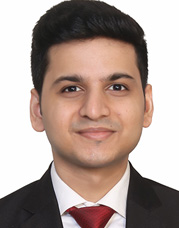
“I made a point of attempting every question, unless I can’t understand the meaning of a problem”
CAT Topper Interview: How Nandan Goel Cracked CAT 2020 with 99.95% to Join IIM Calcutta
MBAUniverse.com has published a series of articles on CAT preparation plan & strategy adopted by CAT Toppers to help the aspirants preparing for CAT exam. Next in the series, is an Interview with CAT Topper Nandan Goel who was an IIM Calcutta student of MBA 2021-23 batch.
A Dancer and Equity Investor, CAT topper from Delhi, Nandan Goel has done his Bachelors of Management Studies (Finance) from Shaheed Sukhdev College of Business Studies, Delhi University. This CAT topper 2020 Delhi has earned 10 months of work experience with DE Shaw while preparing for CAT 2020 and before joining IIM Calcutta for MBA 2021-23 batch. An inspiration for CAT aspirants, Nandan cracked CAT 2020 with 99.95 percentile with his self-preparation. Apart from IIM Calcutta, this CAT Topper at IIM Calcutta from Delhi Nandan converted IIM Lucknow, IIM Kozhikode, IIM Indore, FMS Delhi among other top B-schools. Nandan also appeared in XAT 2021, scored 99.47 percentile and converted XLRI as well. However, he preferred to join IIM Calcutta.
Remaining consistent in his CAT preparation, Nandan adopted the strategy of keeping a balanced combination of hard-work and smart-work and meticulously followed a daily self-study schedule of 2 to 2½ hours followed by mock exams on weekends. This also ensured a work-life balance. With a firm confidence and planned preparation strategy, Nandan was confident to crack CAT 2020 with high score and get into his dream IIM. He focused on managing the time during the exam to bell the CAT.
MBAUniverse.com invited Nandan Goel to share his preparation and exam taking strategy, GD-PI experience. Read the text Interview on his CAT preparation strategy and success mantra for CAT aspirants.
We hope you found this CAT topper interview both insightful and inspiring. Read more CAT Topper Interviews. Also read all about CAT 2025 Exam, CAT Registration, CAT Preparation 2025, CAT Syllabus, CAT Pattern and take CAT Mock Tests.
I was shortlisted by all IIMs, FMS, and XLRI for the final selection round.
Apart from getting final admission offer from IIM Calcutta, I converted IIM Lucknow, IIM Kozhikode, IIM Indore, FMS Delhi. I finally decided to join IIM Calcutta
IIM Calcutta was the best brand name among my converted colleges. I am interested in Finance and IIMC being a finance campus made more sense to me. Moreover, it has a CEMS program by which we can get an MiM degree in the 5th term.
It was my second CAT experience and I am happy that I cracked CAT 2020 and got IIM Calcutta. I scored 99.95 overall percentile in CAT 2020; 98.7 percentile in VARC section; 99.37 in DILR Section and 99.94 percentile in Quantitative Ability section.
Apart from CAT, I appeared in XAT 2020 and scored 99.47 percentile. I converted XLRI but did not join.
I have done Bachelors of Management Studies (Finance) from Shaheed Sukhdev College of Business Studies of Delhi University. I belong to Delhi. My father is a Businessman, Mother is Homemaker and my brother is a CA Aspirant. I worked for 10 months at DE Shaw (US-based Hedge Fund) before joining IIM Calcutta
My main strategy was to be regular and maintain a peaceful state of mind throughout the preparation. I started preparing in July but made sure that there was no phase in between which made me casual about the preparation. I went into the study phase with a strong mind regarding my decision to give CAT and pursue an MBA and made sure that the thought remains intact throughout the journey. To achieve that, I tried talking less to people who would instil negative thoughts in my mind about the difficulty of CAT, usefulness of an MBA, etc. I had a clear schedule to follow: around 2-2.5hr of daily self-study and mock exams on weekends. This also ensured a work-life balance, thus helping in avoiding any kind of stress associated with entrance exams.
I believe VARC is one section which requires existing acumen and little of current preparation. Hence, I solely focused on mocks and sectional tests. But again, I completed them in their entirety. I made a point of attempting every question in this section, unless I can’t understand the meaning of a problem.
I refined my basics using the material I had by attempting some questions from some chapters. But the major practice came through sectional tests and mock exams. There was no test in my student portal which was not attempted by me. They gave a glimpse of the actual questions which we can see in CAT.
My major focus was on this section. I completed the material (TIME books) and had for 3 times, attempted each and every question. This was followed by giving sectional tests on a regular basis. In short, I exploited all the material I had to a great extent.
I considered myself weak at DILR because I constantly scored low in this section. Apart from the preparation, I made strategies on how would I go attempting the section. I would first give 3-4 mins to scan the entire section to identify what type of sets are there in the section. Then, I would make a priority list of which set I would attempt first. This saved my time by not wasting time on the sets which seem difficult to me. I attempted each question on a separate sheet of paper so that I can revisit any question later if it didn’t get solved in the first try. A calm state of mind was paramount for me especially for this section.
Mocks played a really big role in my preparation. Around 40% of the time of my preparation went towards mocks. They gave me an idea about the different kind of questions and the level of stress which we can experience during the D-day. It taught me how to manage the time while attempting the questions and also gave checks to my state of preparation. I attempted around 45 full mocks (2-hr mocks) and around 200 sectional tests.
I attended a coaching centre in 2019 but self-prepared in 2020. So, I had the books with me and I purchased a test series along with that. Both these resources were enough for me to prepare for CAT. I believed that the books were self-explanatory and if I stay motivated throughout, then I’ll be able to make it without any extra help.
A day before CAT was full of parties for me. I didn’t even see my books on that day. On the day of CAT, I took an 8 hours sleep, reached the venue well before time and didn’t take any books along with me. I listened to songs and resorted to various other means to remain calm and not get scared of the competition which I can see in the form of hundreds of test takers in front of me. As far as the exam is concerned, I attempted all questions in serial order, except LRDI. Panic struck in when I saw a difficult LRDI section but I recovered from that state of mind by taking a 10-seconds pause and breathing deep. This helped me to sail through a very difficult section.
I made a list of all the current affair topics which I could think of and started making one-page briefs about them. I revised 4-5 of my UG subjects which I thought would be relevant in the interview. I also made an excel about all potential HR type questions (strengths, weakness, etc.) and framed their answers individually. After framing an interesting introduction of myself, I pondered upon everything which I mentioned in that intro. For eg, if I said that I was from Delhi, I made a brief of common questions surrounding Delhi like number of districts, CM, monuments, favourite places, etc. I even had to research about Shaheed Sukhdev because my college name was Shaheed Sukhdev College of Business Studies. So that is the kind of deep knowledge required for an interview.
My PI-WAT was conducted online. It becomes more difficult in an online setting because you can express less from your body language. So, I had to work on my voice modulations to sound energetic and excited. The PI went smooth. I drove most of the conversation and was able to predict the incoming questions because of my preparation.
For CAT 2021 aspirants, my message is:
Make up a strong mind to give CAT
Talk only to a few people regarding your plans and strategies
Be regular right from when you start till the end
Avoid stress/panicking at any moment, it does more damage than anything else
Remember that CAT is about 50% preparation and 50% state of mind.
Shubham Bajaj

“Attempt 80% Questions with 80% accuracy. It is much better than 100% attempt with 50% accuracy.”
CAT Topper Interview: How Shubham Bajaj Cracked CAT 2020 with 99.98% to Join IIM Calcutta
Coming from the small town of Surat in Gujarat, Shubham Bajaj cracked CAT 2020 with 99.98 percentile and has converted number of top B-schools including IIM Calcutta. A B-Tech in CSE from IEM Kolkata, Shubham has earned about 3 years of work experience at Nomura Research Institute Financial Technologies India Pvt. Ltd, Kolkata working as Software Developer. Despite finding it challenging enough to maintain between the motivation for CAT preparation and work pressure consistently, Shubham did the balancing well and not only cracked CAT 2020 with a high score in first attempt but also converted IIM Calcutta, the top B-school of India.
With a firm confidence and planned preparation strategy, Shubham was confident to crack CAT 2020 with high score and get into his dream IIM. He did not appear in any other MBA entrance test apart from CAT. Apart from IIM Calcutta, he converted IIM Lucknow, IIM Kozhikode, IIM Shillong, FMS Delhi and all the nine new and baby IIMs which participated in Common Admission Process (CAP).
Shubham likes Solving logical puzzles, Watching and playing cricket, playing chess and cooking. MBAUniverse.com invited Shubham to share his preparation and exam taking strategy, GD-PI experience. Read on for his views and success mantras.
We hope you found this CAT topper interview both insightful and inspiring. Read more CAT Topper Interviews. Also read all about CAT 2025 Exam, CAT Registration, CAT Preparation 2025, CAT Syllabus, CAT Pattern and take CAT Mock Tests.
A: It was my first CAT experience and I am happy that I cracked CAT 2020 in first attempt. I scored 99.98 overall percentile in CAT 2020; 96.08 percentile in VARC section; 99.99 in DILR Section and 99.93 percentile in Quantitative Ability section.
I did not appear in any other exam as I focused on CAT only.
Apart from getting final admission offer from IIM Calcutta, I converted IIM Lucknow, IIM Kozhikode, IIM Shillong, FMS Delhi and all the CAP participating IIMs. I finally decided to join IIM Calcutta
I am a B.Tech. from IEM Kolkata in CSE. I have 34 months of work experience in Nomura Research Institute Financial Technologies India Pvt. Ltd, Kolkata as Software Developer. My home town is Surat.
My CAT journey began in the year 2019 around mid-June when I decided to pursue MBA due to the inclination towards the business aspect. I started my research with the exam format, reading a few experiences here are there. I took up a few mocks and analysed them to understand my strengths, weaknesses, and improvement sectors. But I received an onsite opportunity from my organization that clashed with the examination dates and decided to postpone the aspiration for one year. I began my CAT preparation again in 2020 around April, and I found it challenging to maintain the motivation and work pressure consistently. I saw many people scoring reasonably well with their scores posted on PagalGuy, and I contacted them to form a study group.
The purpose of the group was to help each other improve their weaker sections. We used to analyse mocks once or twice a month to understand everyone's perspective and learn better methods for solving a particular LRDI set or a QA question. This process helped a lot in improving ourselves. To summarize, my overall CAT preparation included giving around 30 mocks from a couple of coaching institutes, self-analysis of those mocks followed by group analysis. Also, it included learning few concepts from the YouTube free resources, participating in the free events organized by various online coaching institutes on Facebook.
For VARC and LRDI, I relied almost entirely on the mocks and past year CAT papers. More than the quantity, it’s about the quality when it comes to resources. Focusing more on the mock analysis, having different strategies based on past performance and evaluating those to identify the best approach is critical for one’s success.
For QA, I needed to go through some of the concepts which were not clear enough because of long gap of 7-8 years when I last solved those concepts. I found Rodha YouTube playlist on Quants quite helpful for most of the basic understanding. Along with it, I referred to Prepzone daily events organized on the Facebook Page. During the later phase, I also attended free workshops on topic wise discussion organized by CrackU on YouTube. I also gave few sectionals to increase my attempts in this section.
Being an engineer and the love for logical puzzles, I was good at LRDI and decent in QA. But, the major concern was VARC. In most of the mocks, I could not even cross the sectional cut-off for this section, but I realized a few points during the preparation which helped me score 96+ percentile in VARC section in the actual CAT exam.
1. Initially, I was of the belief that you need to increase your number of attempts in VARC as it is a scoring section and people attempt entire section. But, I believe it is not at all necessary and having an attempt percentage of 80 with 80 percent accuracy is much better than 100 percent attempt with 50 percent accuracy. So, I decided to attempt one RC less on the D-day and spend a little bit more time on evaluating the attempts better.
2. One basic and important thing we need to understand is that VARC is not a lot about having a very good vocabulary knowledge or extremely great grammatical skills. For people who are having difficulty to score the sectional cut-off, they need to understand that its more about comprehending what you are reading. Do not assume any thing from your own. Do not bring your personal bias into the picture.
3. As most of the experts say, go for option elimination. In most of the cases, you will easily eliminate 2 options out of four and for the remaining 2 options, you need a little bit careful attention. In mocks, there might be ambiguity and both the 2 options maybe close enough and you might not agree with the answer, but in actual Cat, it doesn’t happen.
I was more or less dependent upon mocks for most of my preparation. And I wanted the mocks, where the number of people attempting the mocks are more. So, I chose Time and IMS (both having 15k people approx). I personally believe that you need to keep solving the mocks on a regular basis, may be one mock or two mocks a week. Some people believe in completing the syllabus and only then attempting the mocks. I believe that even if a particular portion is incomplete, you should attempt the mock and test the concepts which you have prepared. Also, for the chapters which are not completed, you will understand on how to have the roadmap for preparation for that particular topic. But along with the mocks, mock analysis is extremely important. Giving 20 mocks and analyzing them is much better than appearing for 50+ mocks without analysis.
I relied mainly on self-preparation because I had the basic hold of the concepts and I believe coaching is mainly from two perspective. One, if you do not have the basic concepts covered and the other is if you are unable to manage time. But, I did have the study group with people scoring consistently scoring above 99 percentile, and I was also a member of the Pagal Guy Dream Team (a team of 30-40 people selected based on Past CAT Score, mock scores and their attitude towards the Cat Examination). These two proved beneficial to me as I could reach out to anyone in case of doubts or strategy discussion.
I was a working person, and I did save my leaves initially to take a couple of weeks leave before the D-day to keep my mind calm, composed and focused towards my goal. I did not appear for a lot of mocks during that time and on alternate days appeared the past CAT papers from 2017-19. On the D-day, I was allocated Slot 3, and had already heard from Slot 1 and Slot 2 about the difficulty of LRDI and VARC. But, I did not let that affect me and focused on my strategy. I always believed that if a particular section is difficult for me, it is for everyone in the slot as well. For VARC, I had the strategy of attempting the RC’s first and then the VA part in last 10 mins. For LRDI, I went in a sequential manner and was able to solve 4 out of 5 sets in first 34 mins.
However, could not complete the last set due to shortage of maybe a couple of minutes. For QA, I had the strategy of attempting questions sequentially and have a check on my number of attempts after every 10 mins and start skipping few questions if I am slower than the speed of 5 questions/10 minutes.
After scoring fairly well in the CAT 2020, I was pretty confident of getting a good number of calls, and wanted to make most of the opportunity. I had a pretty good knowledge of my WorkEx and Mathematics, decent knowledge of academics but lacked in General Awareness, Current Affairs and Personal Questions. My GD-PI-WAT preparation involved following strategy
I focused more on improving my weaker sections.
I started going through a few YouTube channels like KhanGS and Dhruv Rathee to understand the major issues in the country and the world.
Also, I had joined Prepzone GDPI course which had a daily discussion on one of the topics among the aspirants. This provided a lot of information regarding those topics.
I kept giving mock interviews to understand different kind of perspective and cross-questions based on my answers.
I went through multiple rounds of transformation of my answers to basic 8-10 common personal questions like “Tell us about yourself”, “Why MBA”, Strengths, Weaknesses, etc.
Sharing below the PI experience at IIM Calcutta. IIM Lucknow and IIM Kozhikode
I did not have a WAT as it was scraped off by most of the colleges. The PI was online for all the calls that I received. IIMA, called us to a centre, but it was a video conferencing call from the centre as well. So, we can call it virtual as well. One of the difficulties in online mode is judging the body language. It might be both advantage or disadvantage based on one’s perspective. But, for a person who is more confident in the body language and expressing themselves, it is a bit of disadvantage. Another problem I found was during one of the interviews, I was given a logical puzzle and I could not solve it entirely because I interpreted it wrong which I later realized as highlighted by some of my friends after the interview. If it would have been an offline interview, the professor would have seen on the paper how I am interpreting, and could have guided accordingly (Not necessarily, but from the experiences, I have read, they do in such cases).
There were few reasons why I chose IIM Calcutta over other B-schools : 1. It is the oldest IIM in India and has a time-tested pedagogy with a very strong alumni base all over the world. Also, the scenic beauty of Joka Campus, is like a cherry on the top. 2. I have an experience in the Fintech organization and it was my work that made me inclined towards business aspect. And IIMC, is known as the Fin Campus, and it could help me in finding myself with a position in one of the finance companies. 3. It is one of the Holy-Trinity!!!
For CAT 2021 aspirants, I would like to say that do not take this as an examination. Rather, take it as a journey of 3 years of MBA life (1 year of preparation + 2 years of college life). Also, make sure that you are not pursuing MBA under peer-pressure or family pressure. Try to read experiences about people who failed, who succeeded, their stories, and learn from those experiences. Also, don’t worry about factors which you can’t change like the past profile and work more towards what lies ahead of you. I had a profile of 8/8/8 and I am from a Tier-3 engineering college but if you have the skillsets, you will definitely make it to one of the top institutes. Read more inspirational stories & secret mantras of CAT Toppers, only on MBAUniverse.com Stay tuned to MBAUniverse.com for more updates on CAT Preparation Strategy by Toppers
Nishakar Kumar
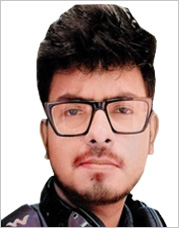
“Recognizing the complexity of DILR Section, I made a conscious effort to enhance my skills”
CAT Topper Interview: How Nishakar Kumar Cracked CAT 2023 with 99.83% to Join IIM Ahmedabad
Nishakar Kumar, CAT topper from Madhubani in Bihar scored 99.83 percentile in CAT 2023 and has joined PGP 2024-26 batch at IIM Ahmedabad. In a candid interview with MBAUniverse.com, CAT topper 2023 Madhubani shed light on his preparation plan, the pivotal role of mocks, importance of CAT Coaching, how he overcame his weak areas and his PI-WAT experience. The CAT topper Nishakar Kumar was a final-year Electrical Engineering undergraduate at IIT Kharagpur when he appeared in CAT. He was born in Madhubani, Bihar and was residing in Bhubaneswar, Odisha. He completed class 10th and 12th from Mother's Public School in Bhubaneswar.
MBAUniverse.com presents edited excepts from the Interview with CAT 2023 Topper Nishakar Kumar of IIT Kharagpur.
We hope you found this CAT topper interview both insightful and inspiring. Read more CAT Topper Interviews. Also read all about CAT 2025 Exam, CAT Registration, CAT Preparation 2025, CAT Syllabus, CAT Pattern and take CAT Mock Tests.
Thank you. I am happy with my performance. I hope to continue doing well.
Preparing for the CAT exam, I adjusted my study strategy by focusing on practicing more with mock tests in the final month. I dedicated each day to completing one mock test using online resources and reviewing past year papers. This approach significantly boosted my confidence as I consistently achieved satisfactory scores. A crucial aspect of my last-minute preparation involved pinpointing challenging questions, flagging them, and dedicating the days leading up to the exam to thoroughly working on them.
My sectional preparation for CAT involved regular practice and review of learned concepts. For Verbal Ability and Reading Comprehension (VARC), I focused on maintaining my proficiency by trying to improve my reading speed, as I believed that making significant improvements in this section within three months might be limited.
To excel in Data Interpretation and Logical Reasoning (DILR), I invested considerable time in understanding the nuances of different question types and engaging in rigorous practice sessions. Recognizing the complexity of this section, I made a conscious effort to enhance my skills and build confidence in tackling DILR challenges.
Being strong in Quantitative Ability (QA), I aimed to maintain and further improve my proficiency in this section. Regular practice sessions and consistent review of QA concepts were key aspects of my preparation. Simultaneously, while focusing on strengthening my DILR skills, I ensured that I continued practicing QA to sustain my competence in this area and maximize my score.
I appeared only for the CAT exam and did not register for any other MBA entrance exams
Mocks played a vital role in my preparation journey as they enabled me to identify my weaknesses early on. Recognizing and addressing these weaknesses early is crucial because it provides ample time to cover and improve those areas. I took around 40+ mocks. In the final month of my preparation, I attempted one mock every day, which significantly contributed to my readiness for the actual exam.
I enrolled in online coaching with IMS and utilised the Career Launcher mock test series. The coaching proved highly beneficial, offering well-structured material that guided me through relevant topics and ensured comprehensive preparation.
I enrolled in online coaching with IMS and utilised the Career Launcher mock test series. The coaching proved highly beneficial, offering well-structured material that guided me through relevant topics and ensured comprehensive preparation.
I utilized study materials from IMS and Career Launcher, finding them highly effective in supporting and enhancing my preparation.
Approaching the CAT exam, I prioritized daily mock tests using previous year papers, achieving satisfactory scores and boosting confidence. A crucial last-minute strategy involved identifying challenging questions during practice and fine-tuning my approach to them before the exam. In my exam-day strategy, I adopted a systematic time management strategy tailored to each section. For VARC, I initially focused on completing all four Reading Comprehensions before addressing Verbal Ability. However, this approach backfired, as the comprehensions proved challenging, leaving me with limited time for the relatively easier verbal ability questions.
I focused on refining my knowledge in areas such as current affairs, hobbies, academics, and HR-related questions.
I have joined PGP 2024-26 batch at IIM Ahmedabad. For me the Dream B-schools were one of the top IIMs, preferably IIM A or IIM B or IIM C!
My Ahmedabad WAT and PI was scheduled on March 9, 2024 at Kolkata. I energized myself with some upbeat music and caught up on the latest news on YouTube, eagerly anticipating the day's headlines in the newspaper. Reading the newspaper had previously helped me answer a question during my IIM Lucknow interview. I proceeded to the verification room with my documents. I discovered once again that I was the first in my panel. There were a total of six panels for the PGP program in my slot, each comprising six members. We were seated according to our serial numbers and then directed to our respective panels where the Analytical Writing Test (AWT) commenced.
My AWT (WAT) Topic at IIM Ahmedabad was: “Analyzing the arguments expressed about ChatGPT, job displacements, and future scope”
My WAT experience: The WAT time limit was 20 minutes and the word limit was 300 words. I meticulously analyzed each argument, dedicating separate paragraphs to explore them from varied perspectives. Given the resonance of the topic with my strengths in the field, I found myself in a state of flow, writing non-stop until I had filled five paragraphs. The relief that washed over me was palpable as I successfully navigated and aced the first hurdle of the interview process
There were two panellists one male and one female in my PI Round. The questions asked included the meaning of my name, Tell us about yourself, Awards I had won, my achievements, Social networking elements, what are KPIs, what is Capilot and its negatives and positives, what is Instrumentation Engineering (My area of study), Some details about semiconductors, State Politics, Political parties in USA, IIM Ahmedabad Alumni, IIT Kharagpur Alumni, My YouTube Channel, MY hobbies and extracurricular activities.
To future CAT takers, my advice is as follows:
Be proactive to identify and address your weaknesses early in the preparation process.
Start taking mock exams early, as they are invaluable in pinpointing areas for improvement.
Consistency is key, so practice regularly and diligently.
Focus on enhancing your reading speed by incorporating newspapers and books into your routine.
And finally, get accustomed to the computer-based testing environment by taking mocks online.
Ekansh Gupta

Ekansh Gupta, CAT 2020 topper from Moradabad, cracked the exam with 99.91 percentile and has converted number of top B-schools including IIM Calcutta. A B.Tech, from NIT Jamshedpur Ekansh was a working professional at EXL Services as Risk Analyst for a US bank while preparing for CAT exam. Ekansh is a poet and loves reading books. Read his CAT preparation strategy and success mantra
CAT Topper Interview: How Ekansh Gupta Cracked CAT 2020 with 99.91% to Join IIM Calcutta
MBAUniverse.com has published a series of articles on CAT preparation plan & strategy adopted by CAT Toppers to help the aspirants preparing for CAT exam. Next in the series, is an Interview with CAT Topper Ekansh Gupta who is an IIM Calcutta student of MBA 2021-23 batch. A Poet and Book lover, Ekansh Gupta has done his B. Tech in Metallurgy and Materials from NIT Jamshedpur. He has earned 22 months of work experience with with EXL services as a risk analyst for an US bank in their credit card domain while preparing for CAT 2020 and before joining IIM Calcutta for MBA 2021-23 batch. An inspiration for CAT aspirants, Ekansh cracked CAT 2020 with 99.91 percentile with his self-preparation. Apart from IIM Calcutta, Ekansh converted IIM Ahmedabad, Bangalore, Lucknow, Kozhikode, Indore, FMS Delhi, MDI Gurgaon among others. Ekansh also appeared in XAT 2021, scored 99.69 percentile. However, he preferred to join IIM Calcutta. Remaining consistent in his CAT preparation, Ekansh adopted the strategy of keeping a balanced combination of hard-work and smart-work and meticulously followed a daily self-study schedule followed by mock tests. This also ensured a work-life balance. With a firm confidence and planned preparation strategy, Ekansh was confident to crack CAT 2020 with high score and get into his dream IIM. He focused on managing the time during the exam to bell the CAT. MBAUniverse.com invited Ekansh Gupta to share his preparation and exam taking strategy, GD-PI experience. Read the text Interview on his CAT preparation strategy and success mantra for CAT aspirants Q: Apart from IIM Calcutta, which were the other top B-schools that shortlisted you for final selection round? A: I was shortlisted by IIM Ahmedabad, Bangalore, Lucknow, Kozhikode, Indore, FMS Delhi, MDI Gurgaon apart from IIM Calcutta Q: Which top B-schools have offered you admission and which one you have finally chosen? A: Apart from getting final admission offer from IIM Calcutta, I converted IIM Ahmedabad, Bangalore, Lucknow, Kozhikode, Indore, FMS Delhi, MDI Gurgaon. I finally decided to join IIM Calcutta Q: What motivated you to choose IIM Calcutta over other B-schools? Please share a few top reasons A: As I converted IIM Ahmedabad in the first list and was having a convertible waitlist at IIM Calcutta, the dilemma was whether I should go with the most obvious choice i.e Ahmedabad or should I think about other factors too. So I talked to a lot of seniors from both the B schools and one piece of advice that was obvious at both places was to choose anyone and you will not regret your decision that's for sure. So, I started looking at other factors which were like being compatible with campus culture where I find that I'm more aligned to join IIM Calcutta over IIM Ahmedabad. Q: How did you perform in CAT 2020? A: It was my third CAT experience and I am happy that I cracked CAT 2020 and got IIM Calcutta. I scored 99.91 overall percentile in CAT 2020; 99.94 percentile in VARC section; 97.26 in DILR Section and 99.63 percentile in Quantitative Ability section. Q. Apart from CAT, did you appear in any other MBA entrance exam? How did you perform in it? A: Apart from CAT, I appeared in XAT 2021 and scored 99.69 percentile. Q: What have been your academic and family back ground? Do you have some work experience as well? A: I have done B.Tech in Metallurgy and Materials engineering with 77.71% from NIT Jamshedpur. I scored 95% marks in class 10 and 94.8% marks in class 12. I belong to a middle class family of Moradabad. My father is a business man and I have a younger brother. I have 22 months working experience with EXL services as a risk analyst for an US bank in their credit card domain Q: What was your overall preparation strategy for CAT? A: I have appeared for two CATs before so I was well aware of the paper pattern and what is required in what particular section to excel it. My experiences from the past two CAT attempts thought me that you can’t rely on your whole expertise in 1 or 2 sections. I know people have done that in past but for myself, I realized that a better strategy is to focus on all sections equally and try to maximize score wherever possible. One change from the 2019 attempt was to shift major focus on mocks and their analysis. As I was working, so weekdays used to be tough. So I lived up with the formula of two mocks on each weekend. Although, whole this WFH thing was a little breather as I shifted to my hometown, so weekends were fully utilized. Q: Please share your sectional preparation strategy for VARC in CAT? A: This was my Achilles heel in the last two attempts so I decided to start with the basic read 10 books in a period of 2 months. Post that I started with CR exercises from GMAT Club and other free resources. This was followed by practice from past mocks. I also enrolled for GEJO VARC 1000 which I found quite useful. Q: Please share your sectional preparation strategy for DILR in CAT? A: Previous mocks in a time-based environment was my strategy to tackle this section. By time-based environment I mean one should set a timer according to their prep level before starting a particular set. This helps us to better re-create a mock or actual CAT environment. Two YouTube resources that I followed were the LRDI master and Anastasis Shankar. Q: Please share your sectional preparation strategy for QA in CAT? A: Master individual topics and practice them as extensively as you can. For QA I relied on the Cracku study room used to practice there a lot. I was also active in some FB groups such as Elites Grid, Quantifiiers where I used to do freely available mixed practice sets. Q: Was there any particular section/area that you were weak at? How did you overcome this challenge? A: As I already mentioned above that VARC was something which I considered as my weakest section because my score in the past two CAT attempts was in 90-92 %ile range in that section. I figured out this after my CAT'19 score card that if I have to dream of a top B school this section needs special attention. I talked to some seniors who scored well in past years and all of them suggested reading as a habit to ace VARC. So, I started with 10 books, a mix of fiction and nonfiction books. Post that I switched to CR practice over free resources like the GMAT club. After spending some time there, I started practicing VARC from previous year mocks, past CAT papers. There were some telegram groups I was part of which use to provide free VARC practice resources like RC a day or google form-based tests. Along with all this, I also enrolled for GEJO's VARC 1000 that helped me know the techniques or strategies I was missing. Also, it was a great practice resource too. Q: What role did Mocks play in your success? How many mocks did you attempt before the exam? A: Mocks were a very important part of my preparation strategy and starting from April'20 I gave around 40 full-length mocks till Nov'20. The main advantage that mocks provide you is to get habitual of the emotions that one faces during an exam. For example, if your one section was bad then mocks give you ample opportunity to learn from mistakes and how to control your emotions in the next sections. This was something that helped me a lot as I was not happy with my LRDI performance in CAT but that doesn't affect my QA section and this attitude was build through mocks only. One other benefit that mock provide you if you are enrolled for two three mock series is a real-time analysis of your competition in actual CAT. Q: Did you self-prepare or attend a coaching centre and why? A: I self-prepared for CAT in all 3 attempts however was enrolled at two resources as mentioned above for practice. The reason why I never enrolled for any particular coaching was that I believe there is a lot of content available over the internet we just need to find that out. Finding content is just 1 part of the story we also need to be self motivated enough to pursue that dream without any coaching. Q: Please share your strategy for the CAT Day. What was your last-minute preparation? How did you plan your CAT test taking? A: This year my slot was 3rd for CAT i.e. I was exactly sure about the paper pattern and number of questions, unlike the first slot. This also means that I was about to get 100s of reviews from both the slots as social media will be flooded. So two things that I tried to do was the first to talk to only my friends who will tell me about the paper pattern but not about the difficulty level of the exam. Second, to stay away from social media, till I was done with my slot. Few of them worked and few didn't, so before writing my exam I was having a rough idea of difficulty level of slots. Although, my past experiences have taught me difficulty level of one slot is not related to other slots in any way. So without giving much thought, I appeared for the exam by trying to keep my calm and maintain the strategy I was having for D day. Q: How did you prepare for IIM Calcutta GD/PI/WAT? A: This year's B-school process was mainly considered for PI except for Bangalore where WAT was part of the process and AWT for Ahmedabad. My experience with the Interview process taught me that you need to know yourself very well your answers should be framed well and you should have hands-on current affairs with opinions on them. All this process within a span of 2-3 months requires good mentors. I found one in the form of Arvind Shankar sir, was enrolled with him for the GDPI course with him and he helped me a lot during the preparation. Along with this, I was also part of a group where some seniors from IIM C and IIM B were helping us with interview prep. Q: In this pandemic situation, was your PI-WAT conducted in person or was conducted Online? How was your PI-WAT experience? A: My all PIs were online except for Ahmedabad where it was online but in a proctored environment. My experience with all PIs was good. In the process, I have learned a lot and enjoyed it. I managed to have some good conversations in my PIs that I believe helped me to convert my all calls. One thing that I really liked about the PI process was very good nature of some Profs during the interview where they try to bring us in comfort zones before asking us the main questions. Q: Your final message and tips for candidates preparing for CAT 2021 A: Some tips that helped me during my CAT journey: Be adaptive to the new challenges Get a peer group that will help you to keep pace. There will be a lot of highs and lows during various mocks staying consistent and calm help you during that phase. Things might change on the D Day so in case you are scoring well don't let it cover your head in case you are not scoring up to your expectations please keep putting in effort. Read more inspirational stories & secret mantras of CAT Toppers, only on MBAUniverse.com
Ekansh Gupta, CAT 2020 topper from Moradabad, cracked the exam with 99.91 percentile and has converted number of top B-schools including IIM Calcutta. A B.Tech, from NIT Jamshedpur Ekansh was a working professional at EXL Services as Risk Analyst for a US bank while preparing for CAT exam. Ekansh is a poet and loves reading books. Read his CAT preparation strategy and success mantra
We hope you found this CAT topper interview both insightful and inspiring. Read more CAT Topper Interviews. Also read all about CAT 2025 Exam, CAT Registration, CAT Preparation 2025, CAT Syllabus, CAT Pattern and take CAT Mock Tests.
I started with 10 Books, a mix of fiction and notification books for VARC Preparation and then switched to CR practice over free resources like the GMAT club. Also, I enrolled for GEJO's VARC 1000 that helped me know the techniques or strategies I was missing